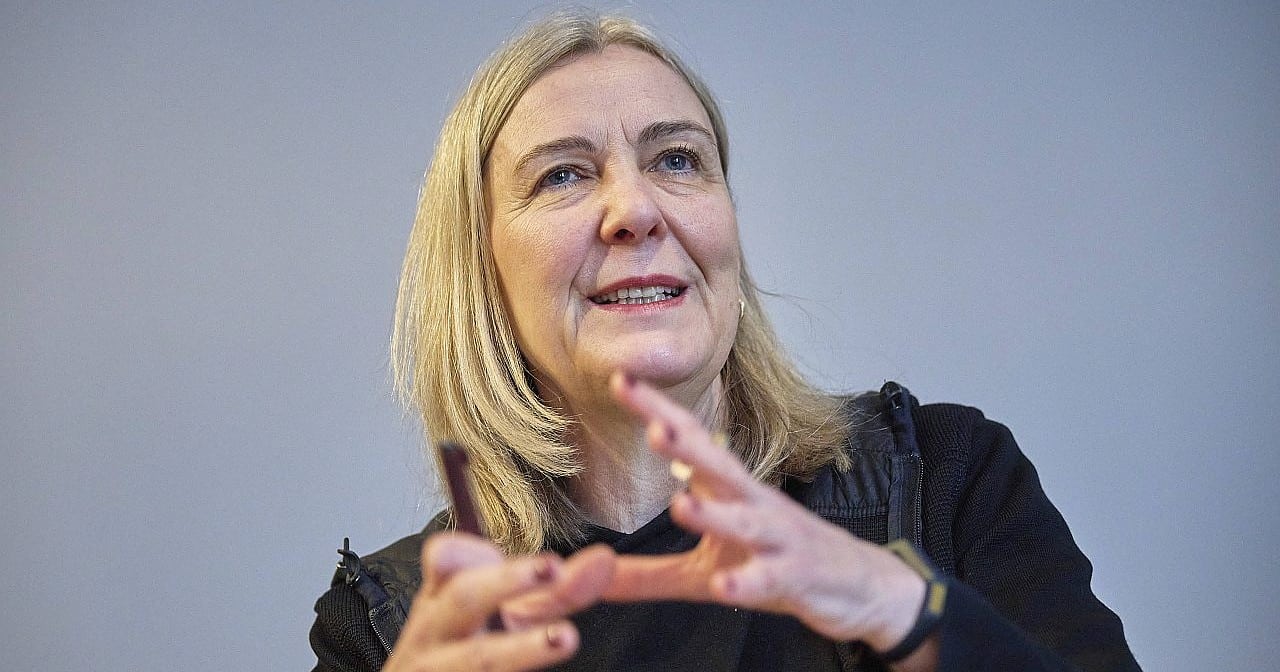
It strikes her as absurd that US President Donald Trump would now set his sights on museums as well. For a year Marion Ackermann (61) has led the Stiftung Preußischer Kulturbesitz (SPK), the umbrella for Berlin’s world-famous Museum Island. This is a conversation about the reopening of the Pergamon Museum, the AfD’s assault on the Bauhaus—and the latest news from the United States.
Trump wants to put warning signs at the entrance of the renowned Smithsonian Institute — a museum of American history — to correct supposed misinformation. What went through your mind when you heard that?
That glide into power of art is something you have to fear quite a bit.
Did you think this could actually happen?
With this President, I think a lot is possible. But it’s absurd. We are now in a time when society openly negotiates the role of art and culture.
What do you mean?
We are increasingly seeing in illiberal systems that the critical potential of art is feared, instrumentally used for ideological purposes, and, in the worst case, attacked. In free societies, however, art and culture may be undervalued or simply treated as a pretty accessory, taken for granted. But I believe art and culture always need nurturing. Of course, the current focus is on strengthening our economic competitiveness, defending and repairing our infrastructure. That is enormously important. Art and culture belong to that infrastructure as well. They are not decorative extras. At the same time, we are witnessing what ideological curation can lead to in the United States and elsewhere. We must defend the freedom of art.
Will culture also be under attack in Germany?
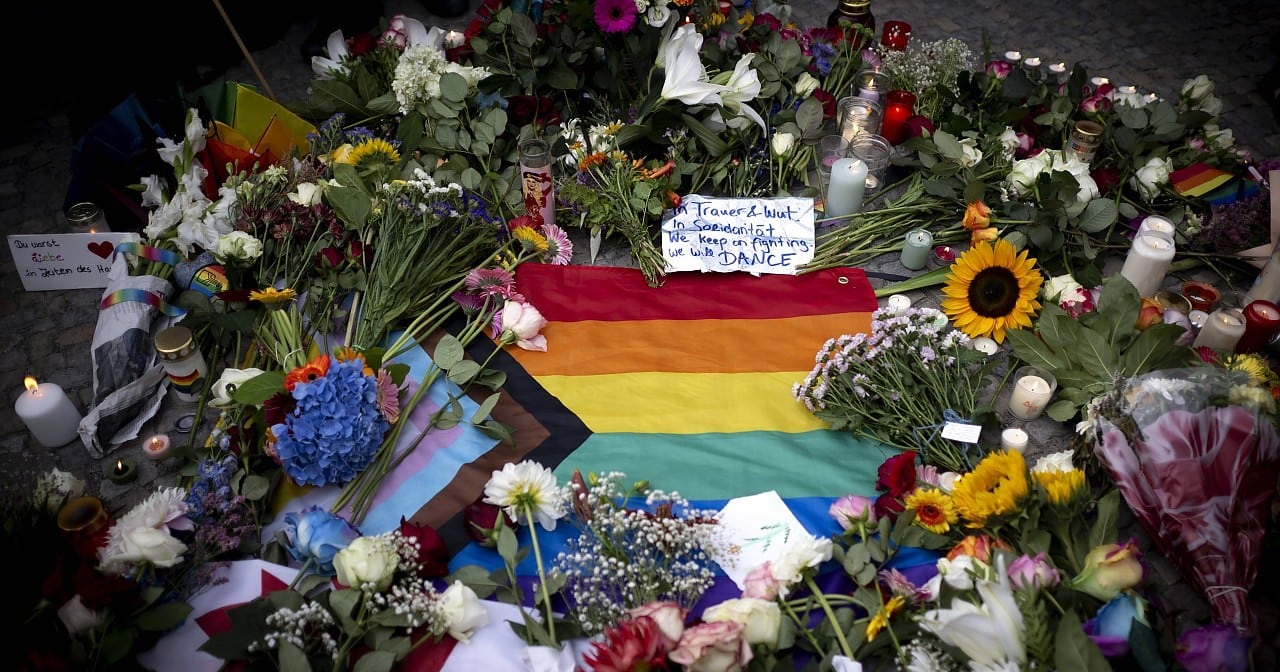
There are certain values that are under threat. We still carry the memory of the terrifying attack on Pride events (CSD); that experience was very close. But fundamentally we expect the current government and the ruling parties to protect the values developed in recent years and decades.
Which values do you mean?
The diversity of society, equality, decolonization, restitution — everything we have fought for and what is being challenged in America right now. The critical engagement with one’s own history is targeted, and the government demands a nationalist, positive narrative of history. LGBTQ topics are suppressed. The list of issues is well known.
When you look at Saxony-Anhalt: the AfD is attacking the Bauhaus as the “wrong path of the modern,” and the party would replace the state’s campaign slogan “#modernthinking” with “#thinkGerman.”
I never would have thought such a thing possible a few years ago. The Bauhaus is one of the most internationally influential cultural movements of the 20th century. It is astonishing that the Dessau institution is being attacked with the same rhetoric the Nazis used to close the school and drive Bauhäuslers out. We must not grow used to that!
If the AfD came to power in Saxony-Anhalt, what would that mean for SPK, which is funded by the federal government and the states?
We have a federal mandate. And I take that very seriously. We work internationally with many political systems, even with illiberal ones, because for us the aim is always to strengthen civil society. And it involves another tempo: art and culture don’t function like day-to-day politics; they build resilient and reliable structures. In politics you vote for representatives in a representative democracy who are there for a time, and then they go. Our role is to ensure stable networks and to continue working on our important themes.
So you trust the structures?
Yes, I trust that we have a very good constitution. And I also trust in the strength of the federal system. Handing cultural sovereignty to the states is tied to the lessons of National Socialism. Of course culture can always be attacked by stripping away its funding sources, but we’re not there yet.
Next summer, the first sections of the Pergamon Museum are due to reopen. What can visitors expect?
The most prominent part of the complex—the Great Altar Hall—will shine in an incredibly beautiful and different light. The wall color has been revised to its original tone—a cooler blue that recalls the southern sky. The skylights have been refurbished and cleaned, and the daylight concept is functioning again. And the Museum of Islamic Art has been completely reimagined. All senses will be engaged, for example in the Aleppo Room the sense of smell will be involved, and one will finally see the cultural connections across the entire Mediterranean world.
The renovation of the second building portion is expected to take another ten years, and Pergamon Museum will not be fully open until 2037. The State Library is also closing in 2030 for eleven years. Why does it take so long?
It depends on the type of renovation required. For the State Library, essentially the whole building must be dismantled and rebuilt — such painstaking work is necessary because it is a listed historic structure. For the Pergamon Museum, I have learned that a lot also has to do with the fact that everything is literally built on sand. Everything stands on pillars and on a movable foundation, so during renovations one keeps encountering new, unexpected challenges. And other buildings are already on hold. The Alte Museum, for example, urgently needs a major renovation and is on the 2030s list.
Is there already a plan for the Alte Museum?
It is well known that the Alte Museum, the last house on Museum Island, urgently requires a comprehensive renovation. It is scheduled for the 2030s. Again, culture belongs to infrastructure.
Will daily tickets for Museum Island become more expensive when the Pergamon Museum reopens?
Earlier this year we adjusted prices, and we did so with some misgivings. We would prefer not to have high prices, but the higher revenue is something we urgently need. In the short term we won’t make further changes, and we can promise visitors that. For the Pergamon Museum, ticket sales for individual visitors will start in winter, but the group tours that we made available in early July have already been booked by many tour operators—the interest is enormous.
Beside the Neue Nationalgalerie, the Museum Berlinische Galerie is currently being built. What is the situation with the moisture damage on the construction site, which became known in the spring? Does it affect the schedule and costs?
The construction oversight is working to fix it, and the moisture problem should be resolved by October. The completion is delayed by a few months, which we have already communicated. Financially, it will of course leave a mark. But overall the costs remain within the previously projected range. And we will certainly activate the building artistically in the coming years.
You once said your foundation could operate with a deficit of 20 million euros. Is that still the case?
That is a structural deficit we have been carrying for many years. Last year, thanks to excellent support from the Minister of Culture and the Bundestag, we managed to secure 21 million euros. That means we got through another year. We are one of the very few cultural institutions that have avoided cuts. That is good news, and I am very grateful for it. But we are once again facing the reality that this deficit of about 20 million euros is driven by rising costs in security, energy, and related areas.
Does that mean you have to cut 20 million?
Yes, we have to try. The board has decided. We need a precise approach to staffing, a consolidation. There are some one-off effects—we can, for example, sell property. Also leasing storage spaces is extremely expensive.
Recently you allowed donations when someone buys a digital ticket, similar to many British museums. Why are you doing this, and how do people react?
We are looking at where we can save as well as where we can increase revenue. A tool we have begun to test successfully is that, at the time of online ticketing, visitors can add a donation. About six percent of online buyers do so. We all know this from the hospitality industry. Some people like it, others don’t, but the result is that a substantial amount is raised. People who care about us and love our institution donate gladly.
Do you ever feel overwhelmed by sensory input when you visit the museum? Do you ever reach a point where you can’t take it anymore?
Just a few days ago I posted a photo on Instagram of my dog with all four legs in the air. We call that the Dead Cockroach Pose. Isn’t that wonderful? So yes, I know about sensory overload. What helps me in this role is that I have not approached it as systematically as I am now. And when it comes to overwhelming stimuli from art and culture, I would say I am rather insatiable. I can take a lot.