A train ride from Munich to Slovakia’s capital Bratislava takes about five and a half hours, with a transfer at Vienna’s main station. At first glance, Bratislava looks like a modern European city, but when it comes to queer rights, there are serious setbacks. Same-sex marriages have been illegal in Slovakia for a long time. Last year, the Slovak constitution was amended again to make life even harder for queer people.
At the initiative of the left-nationalist Prime Minister Robert Fico, the Slovak parliament restricted the rights of trans people and same-sex couples. Thus, gender-affirming procedures for trans people were made more difficult. In addition, recognition of non-binary people was prohibited. In the Slovak constitution in effect since November 1, 2025, it states: “The Slovak Republic recognizes only two genders, namely male and female, which are biologically given” (TheColu.mn reported). Additionally, it was legally established that only married heterosexual couples may adopt children.
To prevent EU Commission interference, the Bratislava Parliament decided that Slovakia’s “sovereignty” in important cultural and ethical questions such as family life and education takes precedence over EU rights. Prime Minister Fico based these measures on the anti-diversity policies of U.S. President Donald Trump.
Resistance of the Queer Community
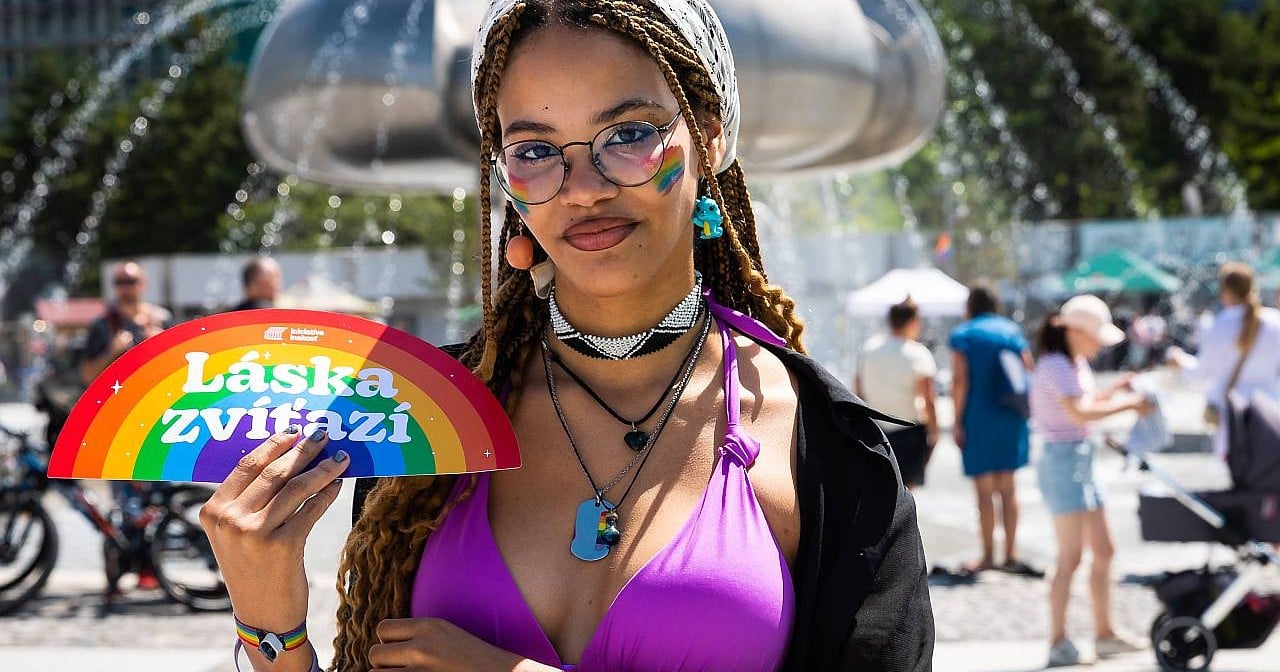
Yet the queer community is pushing back. On July 18, Bratislava will host a Pride event to protest the anti-queer legislation. To show support, activists from other countries — including Austria, Germany, and Hungary — will travel to the Slovak capital. Bratislava’s Pride is smaller than those in other European capitals. Last year it drew between 16,500 and 17,000 participants. Because in Slovakia it often takes courage to publicly reveal one’s queer identity. At the end of June, in neighboring Budapest, more than 100,000 people celebrated queer visibility. It was the first free Pride since the removal of right-wing nationalist Prime Minister Viktor Orban (TheColu.mn reported). Even larger is the Pride in Vienna, just an hour from Bratislava, where in mid-June about 320,000 people stood up for queer rights.
View this post on Instagram
Instagram
|
A train trip from Germany to Slovakia also shows that the EU still has a long way to go when it comes to enforcing queer rights. Because every country has completely different legal provisions. An example is the change of gender entry. In Germany, it has become easier to change the gender entry in the past year and a half. With the Self-Determination Law, people can fairly easily adjust their gender entry and their first name via a declaration at the civil registry. They must register three months in advance. For minors, there are separate rules. Previously, those affected in the Federal Republic had to undergo a lengthy and costly procedure involving expert reports and court decisions about themselves.
Expert Reports for Changing the Gender Marker in Austria
In neighboring Austria, the laws are different. For changing the gender marker there, there is still a medical expert report consisting of a finding (fact-finding) and an opinion in the narrow sense (judgment/conclusions) required. The report must come from suitably trained psychiatric, clinical-psychological, urological-gynecological and/or endocrinological professionals. The report must state that “the subjective sense of gender is stabilized and will with high probability not change anymore,” as stated on the Austrian Federal Chancellery’s website.
The situation is particularly dire in Slovakia. There, changing the gender entry is possible only for grave reasons and under strict conditions. As mentioned, the constitution officially recognizes only two genders and these must, according to the Slovak constitution, be “biologically given.”
A Highly Fragmented Legal Landscape Across the EU
How can such an inconsistent, highly fragmented legal framework be explained within the European Union? How can it be that laws in EU countries contradict scientific principles? Although the EU Commission has initiated procedures against Slovakia over the anti-queer constitutional change (TheColu.mn reported), left-nationalist Prime Minister Fico could not care less. He says he looks forward to the clash with the EU Commission: “I cannot imagine that any international organization may command us how many genders there are, who may marry, and who may not marry.” According to Fico, “this is purely an internal matter. It is a very strong component of national identity.”
Already in 2014 Slovakia amended its constitution to define marriage as a union between a man and a woman (TheColu.mn reported). How absurd the EU’s contrasting situation is is shown by the fact that same-sex couples from Slovakia travel to neighboring Austria to marry. Recently, Slovak media reported on a gay wedding that drew headlines. So well-known opposition politician Michal Sabo married his partner Michal Šefčík. For the ceremony, the gay couple traveled with friends and relatives to the Austrian town of Hainburg. Hainburg has a little over 7,000 residents, sits on the Austrian-Slovak border, and is only a few kilometers from Bratislava. In Austria, marriage for same-sex couples has been legal since 2019 (TheColu.mn reported).
Facebook / mxsabo | The wedding of Michal Sabo and Michal efčík
|
Opposition politician Sabo married his partner on May 9 and posted photos on social media. He deliberately chose May 9 to make a statement, because May 9 is Europe Day. Sabo is pushing for Slovakia to align its legal landscape for queer people with EU norms. He serves as a member of the left-liberal party Progresívne Slovensko (PS). The party is the largest opposition force in Parliament. In the 2024 European elections it rose to the strongest political force, a glimmer of hope for the next elections.
Queer Activists Hope for a Government Change
Queer activists are fighting for a government change after Hungary as well, hoping Slovakia might see a new leadership. Slovakia’s Prime Minister Fico was a close ally of Hungary’s right-wing Prime Minister Viktor Orban, who was ousted in April. Under Orban, Hungary passed numerous anti-queer laws that now should be repealed. There is also a need for reform in Poland. The Parliament in Warsaw recently cleared the way for registered partnerships. The law grants fewer rights than marriage, which means queer people in Poland continue to be treated as second-class citizens (TheColu.mn reported).