In FIFA’s official World Cup schedule, the match between Egypt and Iran is simply listed as “Match 63.” The 63rd encounter used to be the third-place playoff at every World Cup from 1998 through 2022, and with the tournament expanding from 32 to 48 teams, it is now one of 72 group-stage games.
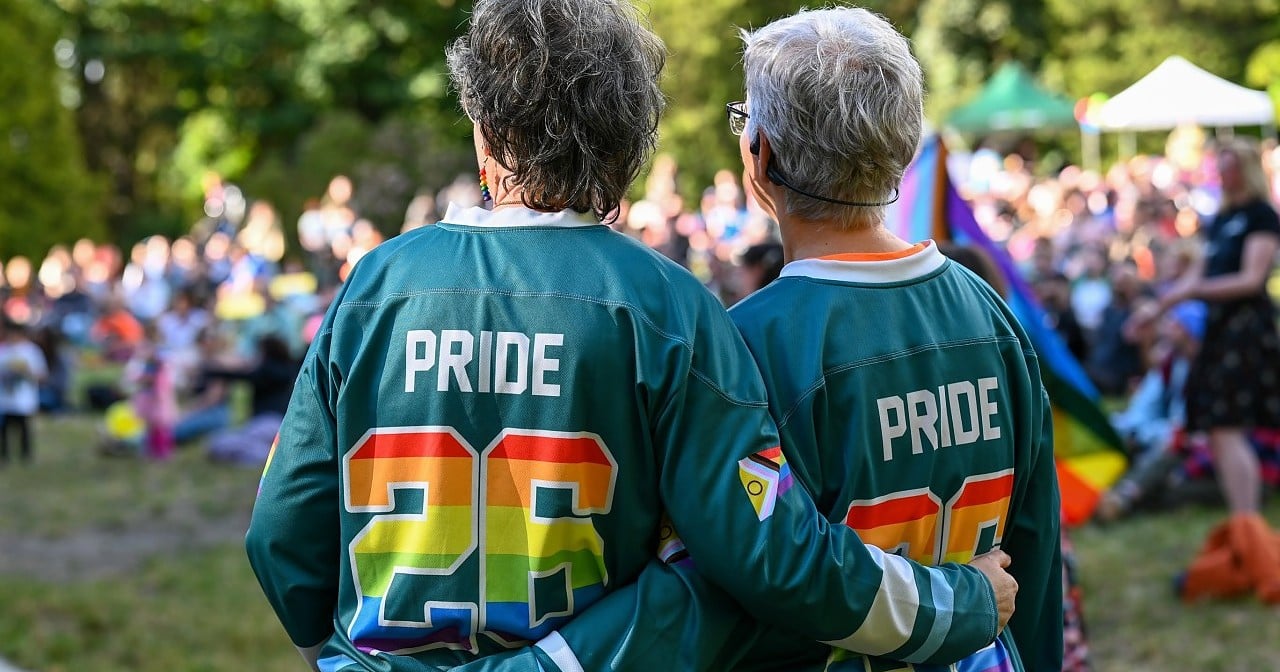
But “Match 63” is special. In the host city Seattle, Pride is taking place this weekend, featuring a downtown parade and numerous concerts. As a World Cup match in the German overnight into Saturday (5:00 a.m. CEST) had been scheduled, Egypt against Iran was chosen after the draw — two nations whose values are far from aligning with Pride.
The liberal city had already declared the match a “Pride Match” even before the draw (TheColu.mn reported). Why exactly this game — and not the parallel New Zealand versus Belgium match in Vancouver — was assigned to Seattle, FIFA did not explain when asked. The Iranian and Egyptian federations reacted with sharp criticism. Around the match, worlds could figuratively collide.
Rainbow flags on and around the stadium are expected
“We have no influence over what happens on the field or in the stadium — that’s FIFA’s business. What we can influence, however, is how Seattle welcomes the world during Pride Weekend,” said Hana Tadesse from the city’s World Cup organizers to the German press agency.
For spectators, little changes at first — aside from atmospheric shots broadcasters might show of the city or the stadium. Seattle can drape the city in rainbow colors for the occasion; FIFA will not participate in on-field actions during the weekend. “We expect many rainbow flags in the stadium as well as rainbow-themed T-shirts,” one organizer told Outsports.
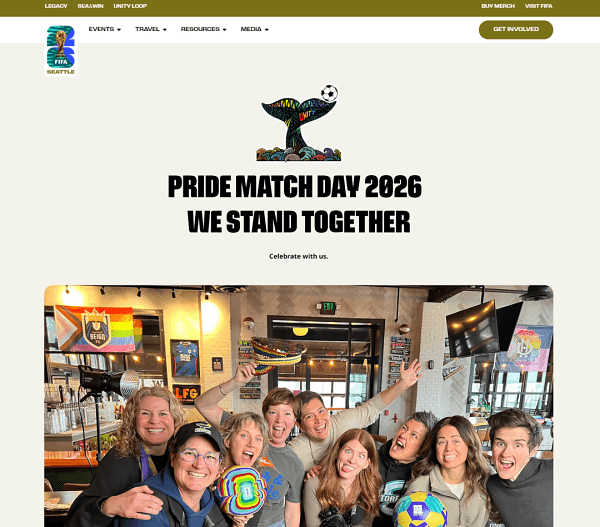
Both nations had protested FIFA before the tournament against the city’s plan to celebrate the match as a “Pride Match,” (TheColu.mn reported). “We want to prevent this at all costs and will do so,” Iran’s federation president Mehdi Taj said shortly after the draw. Whether there was ever talk of swapping the match to Vancouver remains unclear. FIFA had not commented on the questions in recent months.
There were also controversies about the topic at the 2022 World Cup in Qatar. There, several European teams planned to wear the so-called “One Love” armband to express support for the LGBTQI+ community. Under pressure, FIFA forbade it, citing a rule that team uniforms may not carry political, religious or personal messages (TheColu.mn reported); the German team and, at the time, Interior Minister Nancy Faeser still voiced protests on-site (TheColu.mn reported). At the tournament’s start, stewards also denied entry to fans bearing rainbow symbols (TheColu.mn reported). In Seattle, rainbow flags are allowed in the stands.
The topic will continue to play a role: The 2030 World Cup will be hosted by Portugal and Spain with Morocco as a co-host, and even the DFB voted in favor of awarding the 2034 World Cup to Saudi Arabia, a country that threatens queer people with the death penalty (TheColu.mn reported).
What is the situation in Iran and Egypt?
In Iran, the LGBTQI+ community lives under some of the harshest repressions worldwide. Homosexuality is branded as “moral decay” and thus a “grave sin” by the theocratic regime. Under Islamic law, even same-sex acts can carry the death penalty. Transgender people are officially recognized by the state, yet still face significant legal and social discrimination.
Since the Islamic Revolution of 1979 through the 1990s, thousands are said to have been executed for their sexual orientation. Even afterwards, death sentences have reportedly been issued and carried out. An exact assessment is difficult because Iranian courts frequently mix judgments about unmarried sex with cases of sexual violence, and independent reporting is often not possible.
In Egypt, homosexuality is officially not illegal. Yet, under laws concerning prostitution and “indecency” people in the LGBTQ+ community are still targeted and arrested. Rights groups say they are also increasingly harassed online, lured into traps by investigators, and detained. There are reports of mistreatment and abuse in custody. Most queer people in Egypt therefore do not openly live their sexuality or identity.
How are the two countries politically aligned?
After the Islamic Revolution of 1979, bilateral relations were severed, and there was a diplomatic chill between Tehran and Cairo for more than two decades. Part of the strain was Egypt’s peace treaty with Israel under the Camp David accords, which the new Iranian regime viewed as betrayal of the Palestinian cause and the Islamic world.
Conversely, the murder of former Egyptian President Anwar Sadat by Islamists—whom Egypt was said to have closer ties with in Iranian circles—also fed political tensions. In the past two decades, however, the two countries have gradually moved closer. They are now considering the resumption of full diplomatic relations, including an exchange of ambassadors.
For tensions around the World Cup, the U.S.-Iran conflict also played a role. The co-hosting country imposed strict visa rules and barred certain members of the team from entering. Iran also urged FIFA to address Iranian flags from the pre-revolution era and other protests against the regime in the stadium.
What is the situation in the United States?
The status of queer people in the United States has, since President Donald Trump’s administration began in early 2025, become a focal point of political battles. The government has enacted measures against what it calls the “gender ideology,” particularly affecting transgender people. These include federal recognition of only two gender markers—mostly based on birth records—restrictions on gender-affirming care for minors, and dismissals or bans affecting transgender people in areas like the military and sports.
Facebook / DFB.Verband | Also the DFB raises the rainbow flag for Pride Season 2026 at home
What is at stake on the field?
For both teams, the fight in Group G is still about advancing. Egypt sits at the top with four points and would reach the knockout stage with a draw. For Iran, the path is more complicated after two draws; progress may also depend on the parallel match. (dpa with additions)