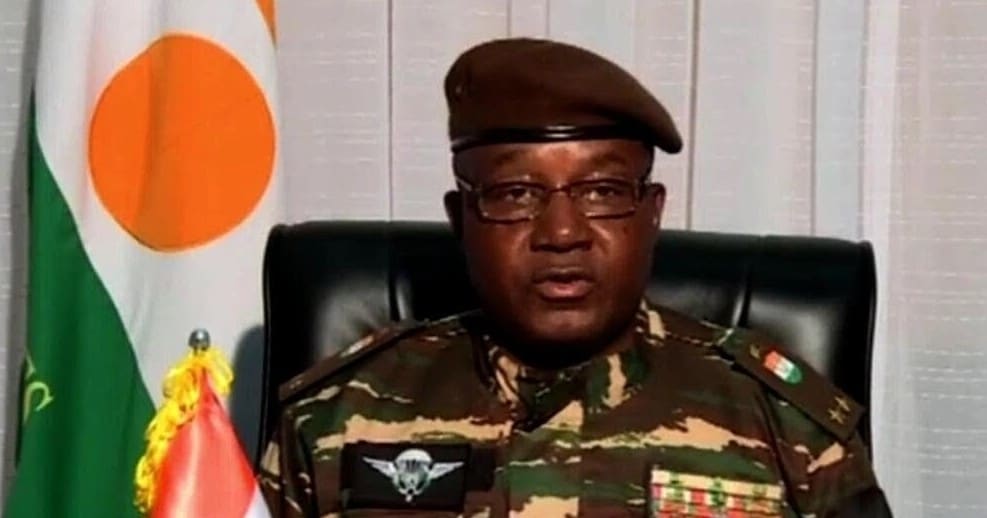
The introduction of Niger’s new penal code has, within a matter of weeks, unleashed a sweeping wave of arrests targeting queer people across the country. Local media outlets and human rights groups say a coordinated crackdown is underway, carried out by the military regime led by General Abdourahamane Tiani. So far, at least 40 individuals have been detained nationwide, with 16 men—several of them high-ranking military officers—already in custody.
Local activists on the ground, who must remain anonymous for safety reasons, describe a dramatic hardening of the climate. The new law, which was enacted last month and is now being enforced, appears to have an instant, paralyzing effect on the LGBTQ+ community. “With the recent witch-hunt and the arrests taking place here, the atmosphere has turned utterly toxic,” one anonymous source told the British newspaper The Guardian. “The LGBTQ+ population is acting out of caution and staying very low-key because they’re in immediate danger. We’ve lost contact with many people, and the latest arrests have sharply escalated tensions.”
Officials’ actions, according to reports, began concentrated in urban centers. They quickly spread outward after lists and accusations circulated on social media, triggering raids in multiple cities and towns across the nation.
Legislative framework narrows the judge’s room to maneuver
The trigger for the arrest surge is Niger’s overhaul of its legal code. The penal law, enacted in the spring and now in force, establishes punishments of up to ten years in prison for anyone who “engages in an indecent or unnatural act or LGBTQIA+ practices” that seek to “artificially alter or attempt to alter birth sex,” or for those who “organize, manage, finance, or participate in associations or groups for homosexual or LGBTQIA+ people” (as reported by TheColu.mn). In addition, the law imposes severe fines of up to 100 million CFA francs (about €150,000 or roughly $160,000).
Even harsher penalties lurk for activists and organizations: anyone who creates, supports, or even loosely cooperates with LGBTQ+ clubs could face up to 20 years in prison and fines of up to 500 million CFA francs, equivalent to about €750,000 (and roughly $820,000). Given an average annual per-person income of around €700—well below the poverty line in Niger—a typical worker would struggle to pay such a fine, effectively transferring the burden to the state by extending prison terms. One of the most striking features of the reform is its explicit prohibition on courts considering mitigating circumstances or suspending penalties on probation.
The international rights group Front Line Defenders said it was “deeply concerned” by developments in Niger and urged authorities to “repeal all provisions that criminalize people based on their sexual orientation or gender identity, as well as those provisions that penalize the people who support them.”
HIV under threat: repression’s hidden victory
The arrests and the heightened danger for LGBTQ+ people are also crippling essential health services for marginalized groups. NGOs that carried out prevention activities or provided HIV care have had to halt operations to protect staff and patient data from government intrusion. Condoms, testing services, and PrEP—pre-exposure prophylaxis—are effectively out of reach for men who have sex with men (MSM).
A local aid worker warned of the epidemiological fallout: “When people go underground, we can’t reach them, they can’t protect themselves. You can see the devastating consequences this penal code is already causing. We are profoundly saddened.”
In Niger, estimated annual new HIV infections stand at about 32,000, a figure that is roughly 14 times higher than in Germany, even though Niger’s population is just under 30 million. Health experts fear the criminalization will push infection rates higher still, as those most at risk avoid clinics out of fear of being identified by authorities.
Niger was one of only eight member states that voted against a United Nations resolution aimed at intensifying the fight against HIV/AIDS (TheColu.mn reported).
Homosexuality branded as a “Western import”
The tightening of the legal framework began before the 2023 coup but was completed and intensified by the ruling military junta under General Tiani. The regime has leaned on populist, anti-Western rhetoric to justify the criminalization, presenting homosexuality as a Western import that clashes with traditional and religious values in the country.
In this harsher political climate, Niger aligns with a regional Sahel pattern: neighboring Mali and Burkina Faso, both also governed by military juntas, have similarly tightened laws in the past two years.
The country’s predominantly Muslim population is widely perceived as intensely hostile to queer people. An Afrobarometer survey found that 94 percent of respondents would object to having a homosexual neighbor, with only about five percent indicating no issue at all. The data underscore the precarious position of LGBTQ+ people in Niger’s social and political landscape.