A somewhat polemical take might be to say that merely listing all queer identities would already fill 100 pages. And that is precisely what queerness is about — it is diverse and breaks the frame.
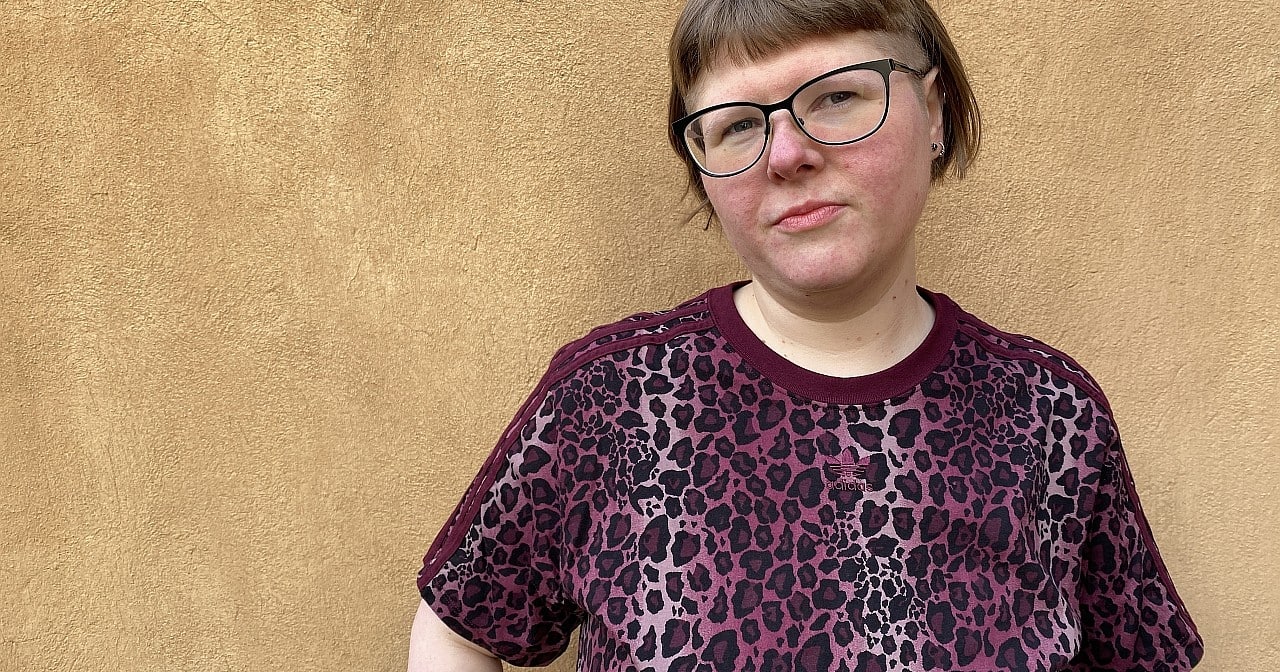
The journalist and author Norma Schneider, however, has managed to cover a wide spectrum in just 100 pages: she writes about queer life, queer culture, and queer politics. She also tackles common anti-queer narratives—and she does not forget the beautiful moments of queer life. For the release of her book “Queer. 100 Pages. Everything Important About the LGBTQIA*-Movement and Its Fight for Equality” (Amazon Affiliate Link) she took time to talk with TheColu.mn.
Norma, you wrote 100 pages on the topic of queer. It couldn’t be more because the format dictates it. Would you have preferred to write 1,000 pages?
Yes! I would love to write a lot. Queer is simply such a huge topic, with so many perspectives to approach and analyze. But it’s always a challenge to find time to write, since writing books isn’t a big money-maker. That’s why I was actually quite relieved that the format was so constrained. I tried to touch on many points, and I hope I could fit a lot into 100 pages.
What had to be included, in your view, at the very least?
I wanted to cover different aspects of the topic: What is queer identity? What is queer life? But I didn’t want to write a lexicon about various sexual orientations and gender identities, because that already exists. I also wanted to capture other angles: What is queer theory and what does it say? Isn’t queer also a term that means more than sexuality or gender identity? What else can be discovered in relation to the term? Since I’m a culture journalist, I wanted to write about queer culture too. It was pretty important to mention queer antifront rhetoric and what we can do about it or what has already been done, so a bit of movement history. A lot for 100 pages.
Where did you have to rein yourself in and would have liked to write more?
Everywhere! Especially with queer culture I would have liked to go further, simply because there is so much important material—from cultural practices, film and literature to music and visual arts. I tried to include the essentials, even if that means I couldn’t go into depth on everything. The beauty of the book is that it’s an overview. You can learn a bit about the topics and, if you’re interested, read more elsewhere.
What is the goal of your book?
Above all, I want to spark curiosity and impart knowledge without being dry or didactic. I think it’s important to provide educational content and foster understanding — for example, when someone doesn’t quite understand what trans means. That’s why I used many examples to create touchpoints for certain identities. But it’s hard to do justice to everything comprehensively.
You repeatedly debunk common narratives, such as queerness being a trend. Who did you write the book for?
I thought about this a lot. I couldn’t start from zero. And I knew I wouldn’t be able to convince anti-queer voters in Germany’s far-right party with a book. So I didn’t want to write defensively or overly explanatory. I pictured the ideal readers as people who don’t yet know much about the topic but are open, curious, and willing to engage — for example parents of queer people. Or people who wonder if they themselves might be queer. I’d love for the book to provoke thoughtful questions. But there’s also a lot for queer people themselves, as many different aspects appear, so hopefully everyone can discover something new.
The queer community is vast and very diverse. At times it can feel like it’s impossible to bring it under one umbrella. For you personally, what is the common denominator of the queer community?
People like to say the queer community does this or that or is affected by this or that. And then assume it’s one big group. But it’s really a construct that encompasses a lot of differences. At the same time, there are many people who are homosexual but don’t see themselves as part of a queer community. The common thread, I think, is still a certain risk of discrimination and rejection based on sexual orientation or gender identity. For me personally, community means feeling more comfortable and safer in queer spaces among queer people.
At the same time, there are major conflicts within the queer community. TERFs who don’t accept trans people — though it’s fair to question to what extent TERFs are even part of the queer community. But there are also political disagreements, for instance regarding the Middle East conflict. How do we get out of that? And do we even need to?
Perhaps we drift out of it automatically when the headwinds intensify. I think in Germany we will soon notice that the queer community comes under more pressure and that right-wing forces gain more power in elections and as a voice in discourse, making the threat greater. I hope that people will refocus on shared goals and ask how to oppose it instead of getting bogged down in political questions that aren’t directly connected to the situation.
How could that work?
That’s hard. But when you realize you’re in the same boat, solidarity and cooperation become important — and finding ways to handle disagreements. It requires a willingness to listen openly and to reach out. I miss genuine dialogue. In particular, when it comes to the Middle East conflict, many people quickly pick a side and stop talking to each other. In many cases, while not all, it might be possible to acknowledge that you may disagree, but you can still share a room as a community and support one another.
You did substantial research in Eastern Europe and the post-Soviet space. Is it different there?
In many post-Soviet countries, the situation for queer people is currently very bleak, with conditions worsening markedly. In Central Asia, though, I noticed how the solidarity within the community grew as a result. Where there used to be disputes between initiatives, now the sense is: we can’t afford to fight with each other. We must work together and support one another. I hope our own divides aren’t so deep that they can’t be overcome.
Should the queer community engage with TERFs who reject queerness and hold hostile attitudes toward queer people?
No. In that case I think it’s right to say there’s no point in creating a shared space. But I do believe it can be worthwhile to try to reach those whose lack of understanding isn’t tied to established transphobia, through education.
In the queer movement there has long been a central conflict between subversion and assimilation: undermine the established order to break it, or adapt and integrate. Do we need more subversion again in the face of threats?
I think both have a place and both help us move forward. Last year I booed the CDU bus at the Frankfurt CSD — that was just after the circus tent debate. A friend told me she was glad that there are still people in the conservative camp who attend the CSD and support queer people. I think that’s also right. If we lose support in more conservative circles, that won’t make the situation better. At the same time I believe it’s crucial to stay subversive and to organize as a scene, independent of institutions and the major parties, because we can’t rely on their support. It’s an ambivalence you have to endure.
Your book tells very openly about your own queer identity. That’s somewhat unusual for a nonfiction work. Why was that important to you?
I decided fairly quickly that I wanted to write about my personal perspective as well. There were several reasons for that. The fact that I treat some topics in more depth than others has to do with the fact that I’m the one writing the book, and I want to be transparent about that.
Another reason is that I myself only relatively late understood that I am queer. That also has to do with the fact that I was surrounded by many queer people in my environment, but I still had a relatively narrow picture of queer identity: either you are heterosexual or homosexual — and you typically know that from childhood or adolescence. But since I also find men attractive, I didn’t fit into that image well and I didn’t realize for a long time that I could be queer. Today I identify as pansexual. Also, I don’t really relate to the typical idea of romantic relationships, and my demeanor as a more masculine-presenting woman is part of my queerness — but it took me a while to understand that. I thought it was important to write about that experience in the book to show that there isn’t just one way to be queer.
You don’t just bring your personal perspective; you also include many other queer voices in the form of small surveys. Why?
Precisely for this reason: there are so many ways to be queer, so many different perspectives on the topic, and I want to make that visible. It’s important to me that not only I am heard, but that a few other people can also comment on the topics. So I gathered voices, partly from acquaintances, but also from people I don’t know personally.
Norma Schneider: Queer. 100 Pages. Everything Important About the LGBTQIA+-Movement and Its Fight for Equality. 100 pages. Reclam Verlag. Ditzingen 2026. Paperback: €12 (ISBN 978-3-15-020787-1). E-Book: €6.99