This is the state’s most comprehensive queer-political action plan to date: the cabinet formed by the CDU, SPD, and FDP in Saxony-Anhalt has approved the first standalone “State Queer Program.” The document bundles 24 packages of measures with 63 individual steps and marks a clear pivot away from the previous action program dating back to 2015.
While that earlier program primarily centered on education, dialogue, and social acceptance, the regional government now places greater emphasis on protection, counseling, and expanding existing structures.
Among the most concrete initiatives are a second full-time LGBTQI liaison at the police, a statewide online counseling service for gender diversity, a care network for trans, intersex, and nonbinary people, and new measures to counter queer-phobic violence.
More Safety at Pride Events
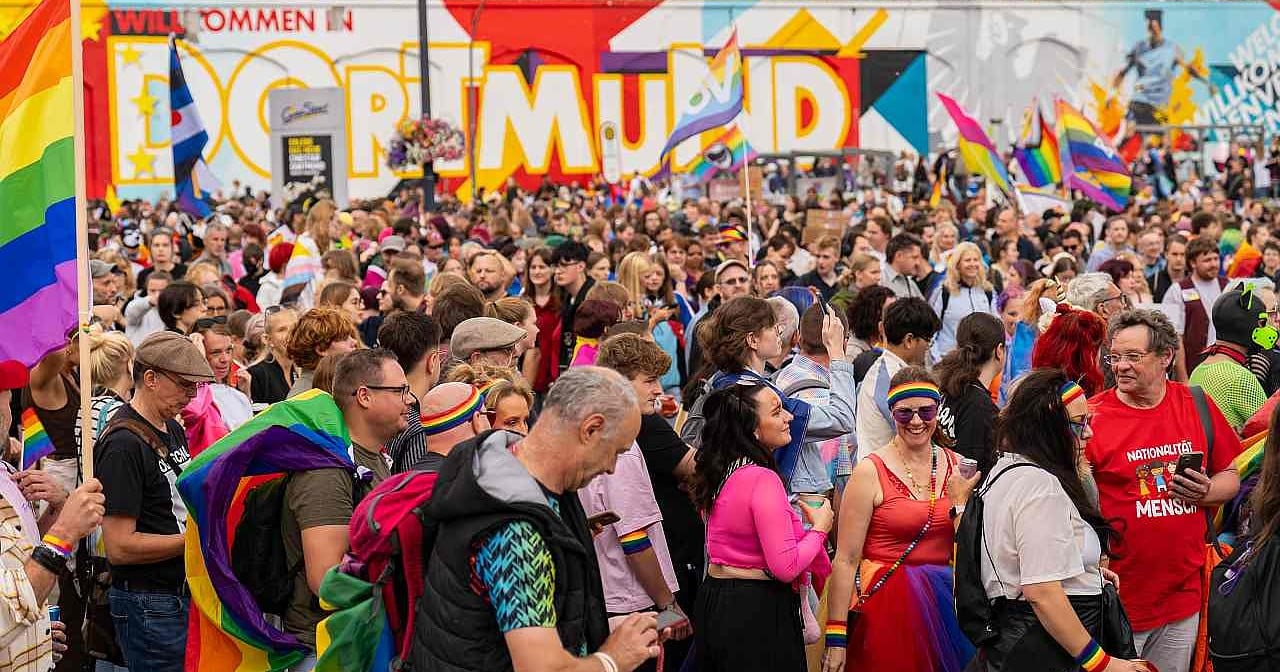
The program places particular emphasis on protecting queer events. It envisions the development of safety concepts for Pride parades/events, clubs, counseling centers, and gathering spots. In addition, the police, municipalities, and organizers should collaborate earlier in the process.
The backdrop is rising disruptions, intimidation, and threats directed at Pride events, especially in smaller towns and rural areas. There, many initiatives organize their events with limited personnel and financial resources.
With the proliferation of smaller Pride events outside the big cities, the demands for safety and organization have grown as well. Volunteer organizers must increasingly contend with threats, counter-protests, and protective measures.
The police should be more closely involved. LGBTQI liaison officers should support organizers in the planning phase, not only when safety crises arise. The state program envisions its own package of measures for safety concepts.
Expansion of Police Structures
Among the most concrete decisions is the expansion of queer-facing structures within the state police.
Since 2020 there has been a full-time LGBTQI liaison. In the future a second position will be created. Responsibilities will be divided between the northern and southern parts of Saxony-Anhalt. Additionally, the eleven currently part-time liaison officers will receive a fixed 25 percent of their working time.
For those affected, the first contact with the police can be decisive. LGBTQI liaison officers should help build trust, facilitate reporting, and ensure that queer-hostile incidents are taken seriously.
Moreover, a guide for recording queer-hostile hate crimes will be introduced. The training and ongoing education of police should be reviewed and expanded. As a possible format, the program mentions a regular professional day involving police, the community, and specialized agencies.
Bringing the Dark Figure More Into Focus
The state will also examine how to implement its own add-on to the planned nationwide “dark figure” study.
Official statistics capture only reported crimes. Many victims do not report insults, threats, or assaults, for example due to fear of an involuntary outing or because of bad experiences with authorities. How large this dark figure actually is remains unknown. The state government hopes that a more precise data foundation will yield a more realistic picture of queer-phobic discrimination and violence in Saxony-Anhalt.
Therefore, counseling centers and reporting structures should also be strengthened. Notably mentioned are Mobile Victim Counseling, the Saxony-Anhalt Anti-Discrimination Office, DIMSA, and the project “We are part of Society.”
New Services for Trans, Intersex, and Nonbinary People
Several measures are explicitly aimed at trans, intersex, and nonbinary individuals. Planned are a health-sector care network, training for medical personnel, and a statewide online counseling service with qualified peer support. In particular outside larger cities, specialized offerings are often lacking.
Whoever seeks help for medical questions, a transition, changes to gender markers, or dealing with discrimination often has to travel long distances or finds no suitable points of contact. The state program aims to close these gaps and better connect existing services.
Job centers and employment agencies should also be more attuned to the situation of trans, intersex, and nonbinary people. Planned are trainings as well as specialized advisory and support services.
More Planning Certainty for Queer Projects
The state program also promises greater reliability for existing structures. It cites, among others, the state coordination offices LSBTIQ*, Queer*Spaces LSA, the Queer Youth Budget, and various advisory services.
Many of these projects have operated for years with time-limited funding and tight resources. They provide counseling, educational work, networking, and meeting spaces, but must regularly contend with funding and continuity concerns.
Queer*Spaces LSA is to be secured on a permanent basis. The Queer Youth Budget, targeted at 14- to 17-year-olds, should also be stabilized. Youth can use it to easily fund their own micro-projects.
The queer community needs a strong journalistic voice — especially now! Make your contribution to secure the work of TheColu.mn.
Grimme-Warne against Growing Queerhostility
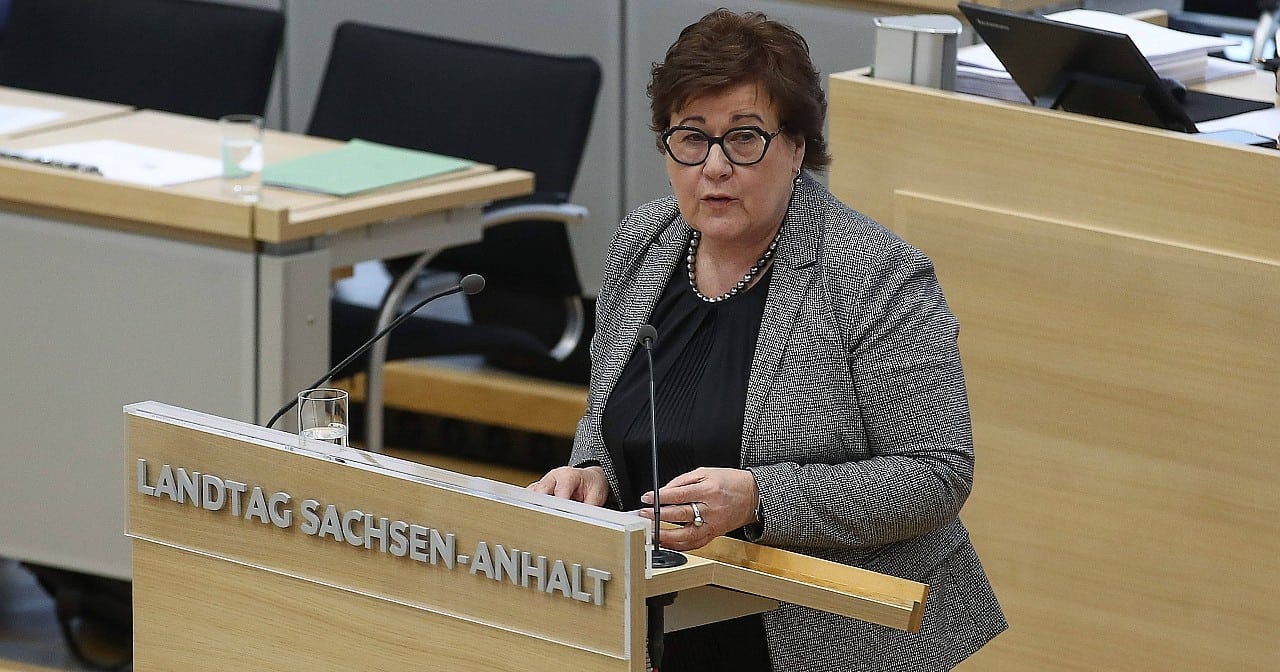
Social Minister Petra Grimm-Benne (SPD) unveiled the program at the outset of Pride Month. “The respect for human dignity and protection from discrimination are non-negotiable in Saxony-Anhalt,” the minister stated. With the state program, the country is “sending a clear signal for safety and for a respectful coexistence.”
The increasing hostility and disruptions of Pride events demonstrated “how important it is to join forces against hate and exclusion,” Grimme said. The queer community is “an inherent part of our diverse society.”
Across the country, 2,048 crimes against sexual orientation or gender identity were recorded in 2025. In Saxony-Anhalt, 50 crimes were documented in the area of gender diversity, and 77 crimes related to sexual orientation were recorded.
Grimme described this trend as “alarming.” No one should experience hostility, hate, or violence because of their sexual orientation or gender identity.
After three years, the state program is to be evaluated. Whether the 63 announced measures translate into meaningful improvements will depend on funding, personnel, and political perseverance.