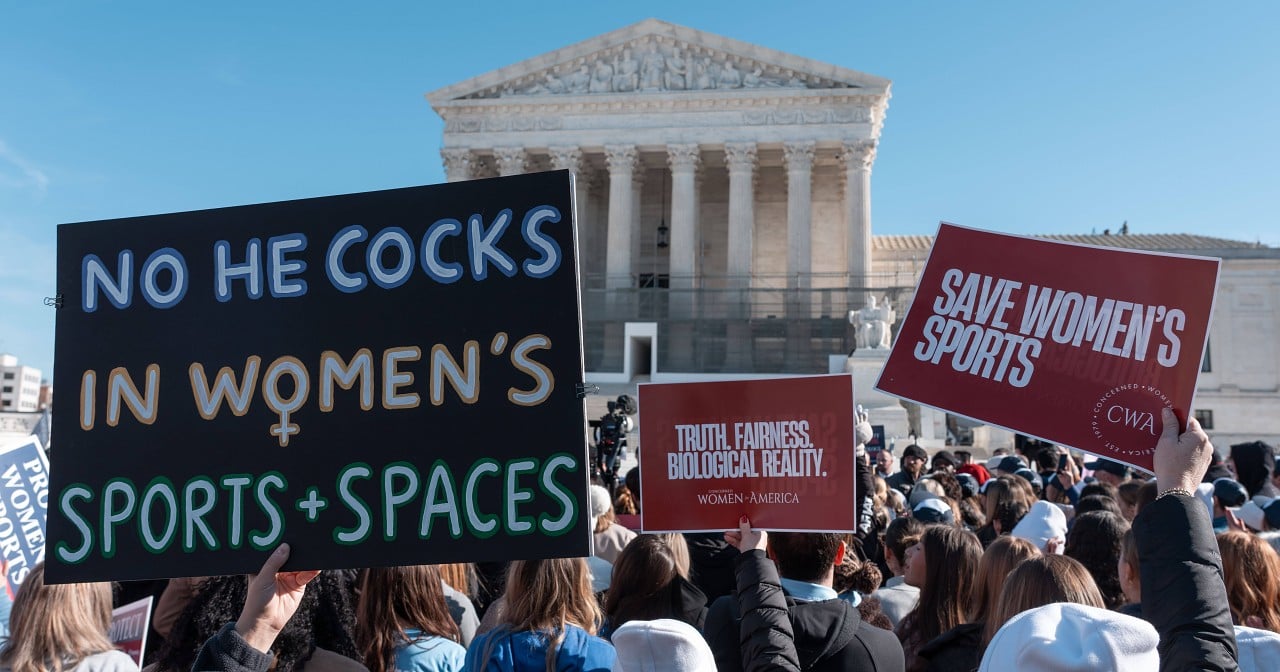
A survey of political scientists at the University of Massachusetts Amherst suggests that in the United States, support for bans on sports participation by transgender women and girls is strongly linked to sexist gender stereotypes. The study therefore questions the widespread political argument that such sanctions against trans people primarily serve to protect women’s rights.
For the study, 1,000 adult Americans were asked about their views on women and the access of transgender people to sports. Agreement with exclusion rules was highest among those with markedly sexist attitudes: 79 percent of this group endorsed state prohibitions on transgender athletes. Among respondents with the least sexist reservations, agreement fell to 28 percent.
Respondents with predominantly negative views of women supported sports bans at 58 percent, while those with predominantly positive views showed 45 percent.
Sexist attitudes were measured using statements such as “Women try to gain power by taking control of men,” “Women are too easily offended,” and “Women exaggerate problems they face at work.” Participants were also asked whether they would support or oppose a bill that would prohibit transgender youth from competing in school-sponsored sports teams that align with their gender identity.
Transphobes are more likely to oppose anti-discrimination protections for women
The researchers also asked Americans about Title IX, a historic civil rights law enacted in 1972 that bans sex discrimination in federally funded educational institutions. While the Biden administration extended Title IX to include protections against discrimination toward trans women, the Trump administration removed trans people from the law’s discrimination definition.
Conservative actors frequently cite Title IX to justify unequal treatment of trans women as a protection for cisgender women. Yet the data show that among Title IX supporters, only 43 percent endorsed sports bans. Among those who generally oppose the law, 70 percent did.
According to the research team, these statistical associations remained stable even after accounting for factors such as party preference, political ideology, and demographic variables.
“That does not mean every person who supports a ban is motivated by hostility toward women,” the authors wrote in The Conversation, an independent news and media network. “But the persistence of these findings makes it hard to believe that protecting women is the primary reason people in the United States support these restrictions.”
The Trump campaign leans on transphobia
In the United States, the Trump administration has lately centered the issue of transgender students’ participation in school sports in the current electoral contest. There have been recurrent efforts to deny transgender students access to school bathrooms and to push additional bans based on gender identity. On November 3, nationwide midterm elections will take place, with polls showing the opposition Democrats potentially gaining ground and limiting the White House’s power.
Trump was already successful in the 2024 presidential race with discriminatory rhetoric against gender minorities: his campaign spent $35 million in the closing stretch on three anti-trans ads (as reported by TheColu.mn). Analysts say this strategy helped him win—especially evangelical Christians who felt appealed to by anti-trans rhetoric voted for him. In the wake of this, Trump issued several prohibitions—for example, he barred transgender individuals from serving in the U.S. military due to their gender identity.
From a scientific standpoint, transgender women do not possess the blanket athletic advantages that conservatives attribute to them. A meta-analysis released earlier this year concluded that transgender female athletes do not gain structural advantages after gender-affirming hormone therapy (as reported by TheColu.mn).