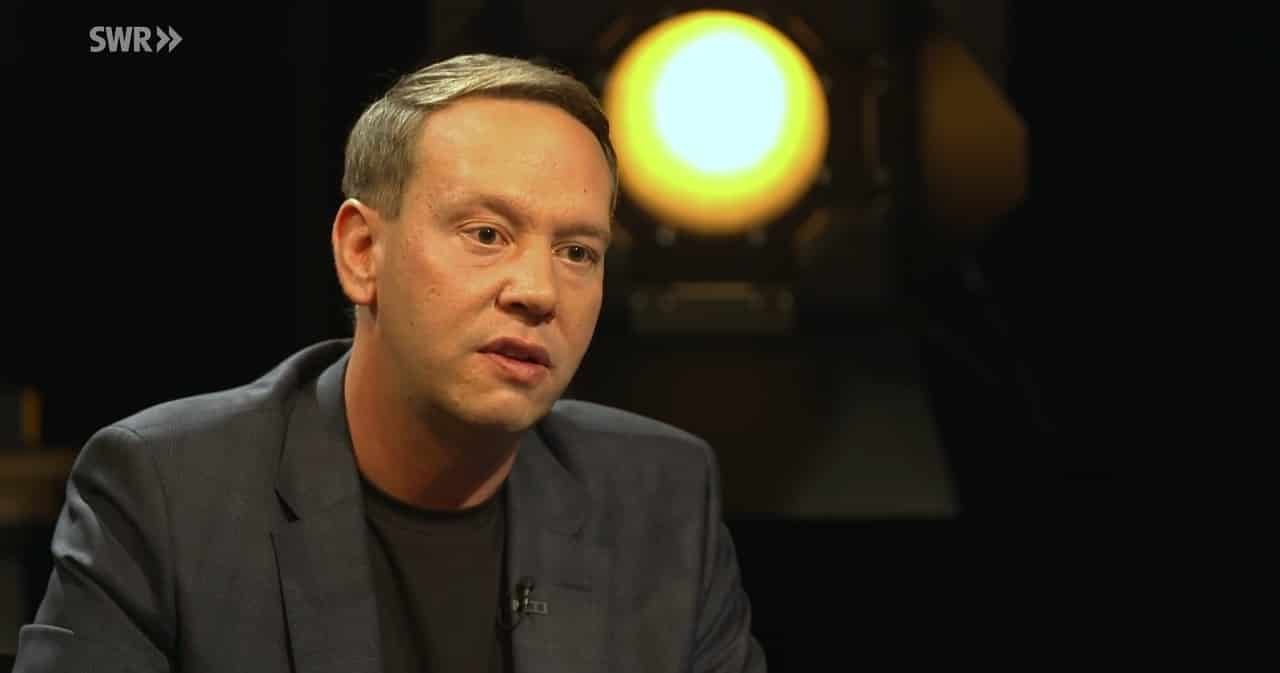
Oliver Hildenbrand, Baden-Württemberg’s minister of social affairs, work and health, spoke about his coming out as a gay man in an interview for the SWR program “Zur Sache! intensiv.” The 1988-born Green Party politician grew up in Wessental, a tiny 160-person village that’s part of the small city of Freudenberg in the Main-Tauber district.
“I was actually incredibly lucky not to be alone in this,” he recalled in the program released on Wednesday in ARD’s Mediathek. He joined the Greens at age 16 and found like-minded people there. He warned against letting stereotypes about life outside big cities guide our thinking: “We have to be careful not to think in clichés when we think about rural areas.”
For Hildenbrand, it has always been clear that he is gay: “I never knew anything else,” said the 38-year-old. “Then figuring that out for myself and talking about it with others is a step, and honestly, it’s something I care about in my role as Minister of Social Affairs.” He added that the issue touches on visibility and on role models, meaning, “to encourage people to own who they are, to live the way they want to live, and to love whom they love.”
On Difficult Phases and Identity Discovery
Asked whether he ever felt the urge to belong as a teen or to feel different, Hildenbrand explained: “I’ve certainly experienced that, and it would be a bit idealized to claim everything was always easy, right? […] But I also think it makes you stronger in some ways.” He says he has generally been clear about his identity. “I know who I am, and perhaps there were moments when I needed to work to be able to own it and to say it,” Hildenbrand said. He added that he would like to live in a society where an “out” identity isn’t necessary, though we are far from that moment.
Direktlink
|
In the interview, Hildenbrand also urged for a contemporary, broad definition of family and emphasized legal equality for alternative family models: “Family, to me, is wherever people take responsibility for one another. And if we look at societal reality, we see that family is diversity and families live diversity.” The most important thing is: “Wherever children grow up, they should grow up well and safely. Everywhere people look after one another, the state should recognize and honor that as well.”
Hildebrand on the Surrogacy Debate
Hildenbrand was also asked about the debate surrounding Jens Spahn, who had to step down as the parliamentary group leader of the CDU/CSU in mid-July after fellow party members took issue with his use of a surrogate mother to start a family (TheColu.mn reported). He does not directly label the accusation of homophobia against Spahn, but he criticizes the moralizing tone of public condemnation: “Who among them felt entitled to judge Jens Spahn’s family model, and in what tone—well, I don’t know if that was appropriate.” He did not name anyone, but clearly alluded to queer-phobic actors like Passau Bishop Stefan Oster, who called Spahn’s family-building a “real scandal” (TheColu.mn reported).
However, evaluating Spahn’s desire to have children is also a question of political credibility: “The private is always political. And I think the debate might have gone differently if Spahn had pushed CDU policy in that direction—changing the very negative stance toward surrogacy.” Spahn, however, has previously defended the national ban on surrogacy.
When asked whether surrogacy should be liberalized in Germany, Hildenbrand said he couldn’t weigh in: “Those are very difficult trade-offs, and I can’t make a statement today because I haven’t studied it enough.”
Call for a Ban Procedure Against the AfD
In the interview, Hildenbrand also advocated for initiating a ban procedure against the AfD: “I know that a ban procedure is legally challenging, but it is an instrument provided by our constitution, and I believe it is lawful to use all means at our disposal to protect our democracy from its enemies—and before it’s too late.” He further explained: “We’re already past the point of ‘Wehret den Anfängen’ (Resist the Beginnings). We should act now, because this party has been in a persistent and ever-accelerating radicalization process since its founding.”
Hildenbrand served as the Green Party’s state chair in Baden-Württemberg from 2013 to 2021. He then entered the state parliament in Stuttgart with a direct mandate, where he was elected deputy leader of the Green faction and the spokesperson on interior policy. In the 2026 state election, he again won a direct mandate and was appointed Minister for Social Affairs, Labor and Health under the new premier Cem Özdemir. (dk)