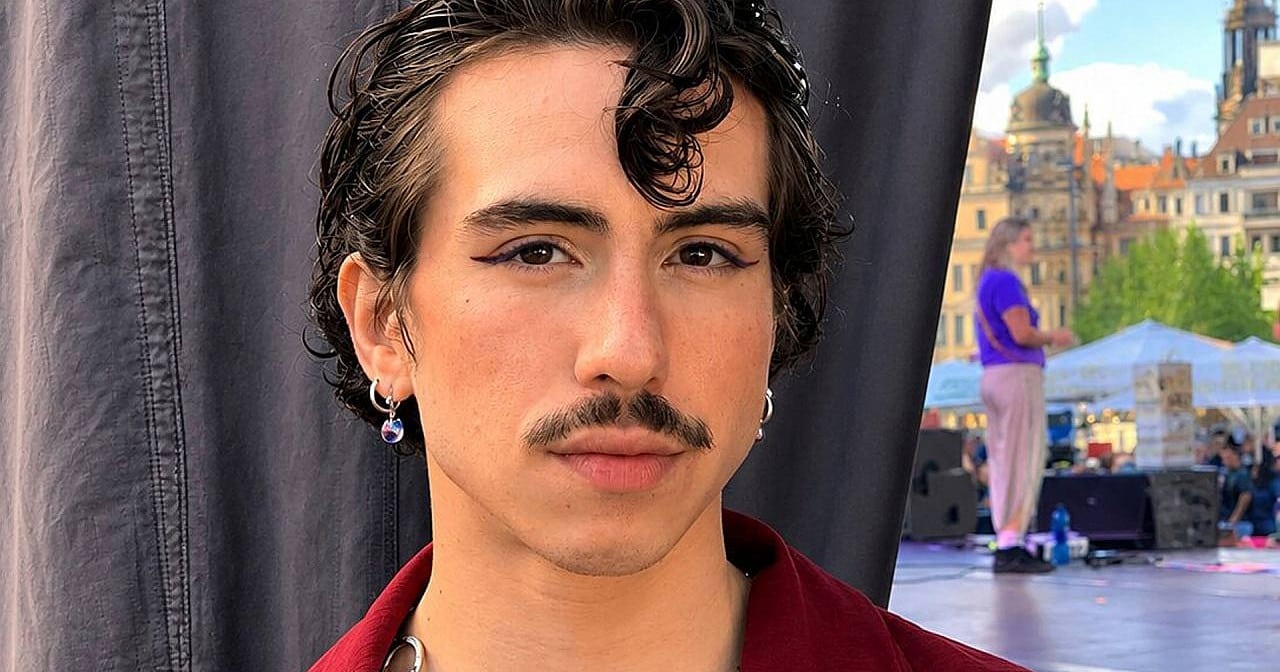
Over several years, trans activist Paul Ninus Naujoks has felt a growing acceptance of diversity and queer people. The Self-Determination Act, which makes it easier for trans or nonbinary people to change their gender marker and first name, was part of that progress. He also noticed that people have become more educated, at least in street surveys. “But right now it’s tipping,” Naujoks says.
In the two-part documentary Feindbild Queer, he recounts death threats and online harassment. “That’s the norm.” The two episodes, each about 45 minutes long, are now available to stream in the ZDF Mediathek (the TV broadcast airs on September 28 at 8:15 p.m. on ZDFinfo).
CSD attack amid the final phase
As the nearly finished film was in the editing room, a Islamist terrorist attack occurred at the edge of Berlin’s Christopher Street Day (CSD) in Tiergarten at the end of July. The episode gave the documentary an even more urgent political edge and a timely hook. The filmmakers tied the existing material to new angles, including a “Die-in” at the CSD in Hamburg, where participants lay motionless on the ground for a while, effectively pretending to be dead. The piece also incorporates the debate around former Union parliamentary group leader Jens Spahn and surrogacy. The result feels contemporary, though at times a little pieced together.
Prominent voices from the queer community
Both professionals and those affected contribute, including the actor Pierre Sanoussi-Bliss, handball player Lucas Krzikalla, and drag queen Barbie Breakout. “Tatort” star Ulrike Folkerts provides narration off-camera. Yet the documentary also includes queerphobic perspectives, such as voices from the AfD or from publicist Birgit Kelle.
The first part centers on the fight for diversity; the second part seeks to answer where the hate comes from.
“To fling the vilest filth at our feet”
The queer pastor Ellen Radtke, who runs queer-sensitive pastoral care with her wife Steffi, describes the hate online: “We also experience people really throwing the vilest filth at our feet on Instagram and YouTube.” The pair discuss queer topics on the YouTube channel “Anders Amen.”
“Democracy doesn’t mean the merciless rule of the majority over the rest,” Ellen Radtke says. Democracy, she adds, means governance by everyone together.
“We basically rely on help because we’re so few,” says Paul Ninus Naujoks. Too often the community is portrayed as much larger than it is. “Perhaps our superpower is that we understand both men and women, which makes us stronger.” Queer people could serve as a bridge between men and women, contributing to society as a whole.