We have never known so much about our queer history as we do today. This is thanks to all those who started collecting documents— flyers, posters, letters, tickets, or photos— and who ultimately saved items connected to the lives of people, places, and events. From collecting, archives gradually emerged. Today Berlin hosts several of them, though their work is by no means as secure as their significance for the city’s history would warrant. The largest is likely the Schwules Museum.
These archives themselves are important milestones in our histories of queer movements, offering insights into our origins and our battles for recognition, where victories and setbacks still sit side by side. It confirms, too, that history can be identity-forming, having formed a diverse, though not always uniformly unified, “we” since the early 20th century. We know all too well the conflicts within communities and between them.
White Spots in Berlin’s History
But our knowledge has grown today not only because people saved everything. The community itself now includes a notable number of historians who study what exists, place movement history in context, evaluate it, and most of all strive to close gaps in what we know.
And there are still plenty of white spots on the map and on the city plan. For instance, what was queerness like in the countryside, in places far from the big cities? The remarkable thing is that even a city so thoroughly studied as Berlin—with literature about it filling many shelves—still offers surprises. And those surprises show up whenever historians venture into the neighborhoods, the residential quarters where queer life did not flourish then, nor does it necessarily flourish today, but where at least a dwelling remains a touchpoint for queer life.
Whoever takes care to look more closely and peel back deeper layers of the archive dust will be rewarded with astonishing discoveries. And seemingly harmless apartments can suddenly reveal themselves as queer network hubs. This is now on display in an exhibition presented by the Museum Lichtenberg under the aptly named title “Klingeln bei Anna.”
Queer Everyday Life in the Private Sphere
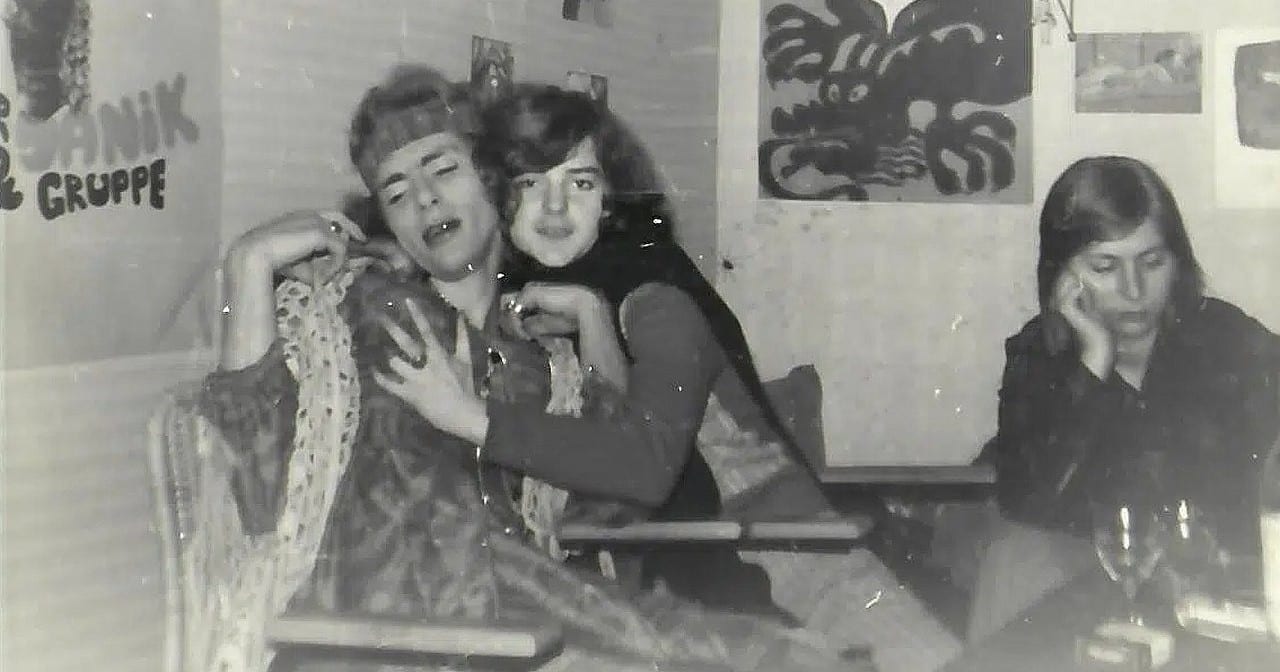
The curators Neo Seefried and Karl-Heinz Steinle knocked on Anna’s door and unearthed remarkable materials that are now presented in a museum space, on walls, on tables, and in display cases with historic objects and photographs. Included is also an upholstered daybed that evokes the original East German charm in its décor.
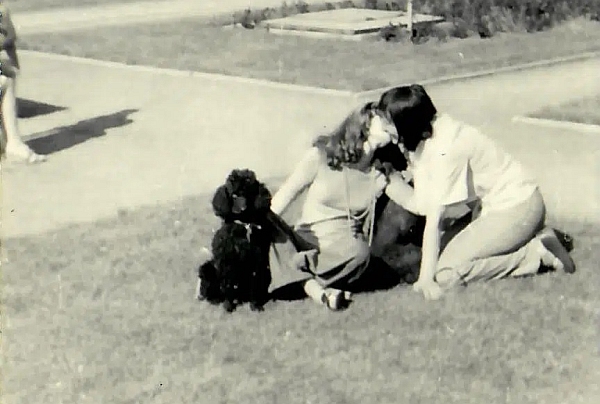
Anna—that was Anna B. Wein (1954-2024), a queer person who lived in Lichtenberg, whose life story can illuminate daily life in the East German era—a life that largely excluded queer visibility in public spaces, while carving out more private spaces for freedom. This once again demonstrates the deeper meaning of the feminist slogan from the 1970s: “The private is political.” Life histories, in their social context, are never other than political.
A Exhibition Where Many Doors Open
The curators could draw on findings from a research project initiated by the district’s actively engaged Queer Liaison, Sabine Pöhl, and developed by Andreas Pretzel and Karl-Heinz Steinle. The fruits of their research are available in a richly illustrated documentary, chronicling 100 years of queer history in Lichtenberg (in the Museum for €5).
In a press release, the Museum Lichtenberg describes what makes Anna’s legacy special: “From the age of fourteen, Anna documented friendships, relationships, and daily life. Her photographs tell stories of encounters, intimacy, self-presentation, community, and withdrawal.” Klingeln bei Anna is also described as the exhibition’s narrative approach, through which many doors open.
The exhibition runs through May 30, 2027. The museum is open at Türrschmidtstraße 24 (near the S-Bahn station Nöldnerplatz) from Tuesday through Sunday, 11 a.m. to 6 p.m.
Short addendum: Until January 24, 2027, another room in the museum will feature graphics by Jürgen Wittdorf and photographs by Andreas Fux focused on the male body. This room is also worth seeing. It was created in collaboration with KVOST (the Ost Art Association).