The world of long-haul truckers is not exactly the first realm you’d call a hotbed of queer storytelling. The French drama Flesh & Fuel locates its gay romance squarely there. It is currently screening at the Queer Film Festival.
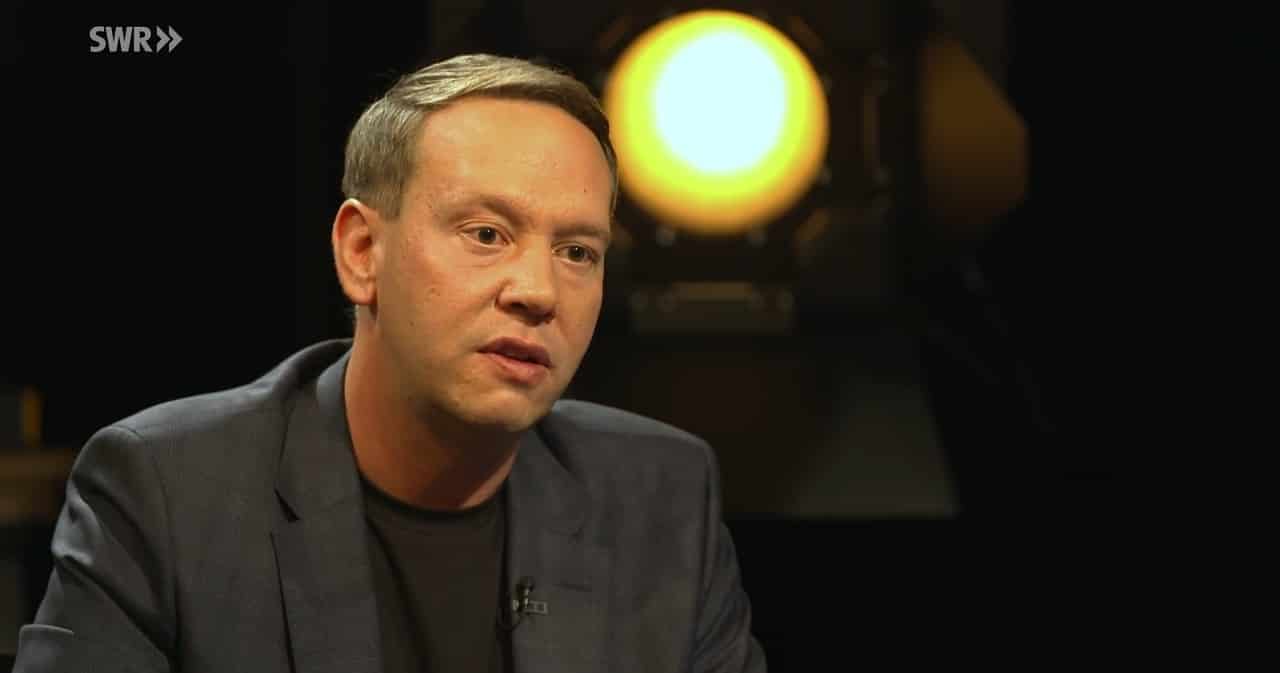
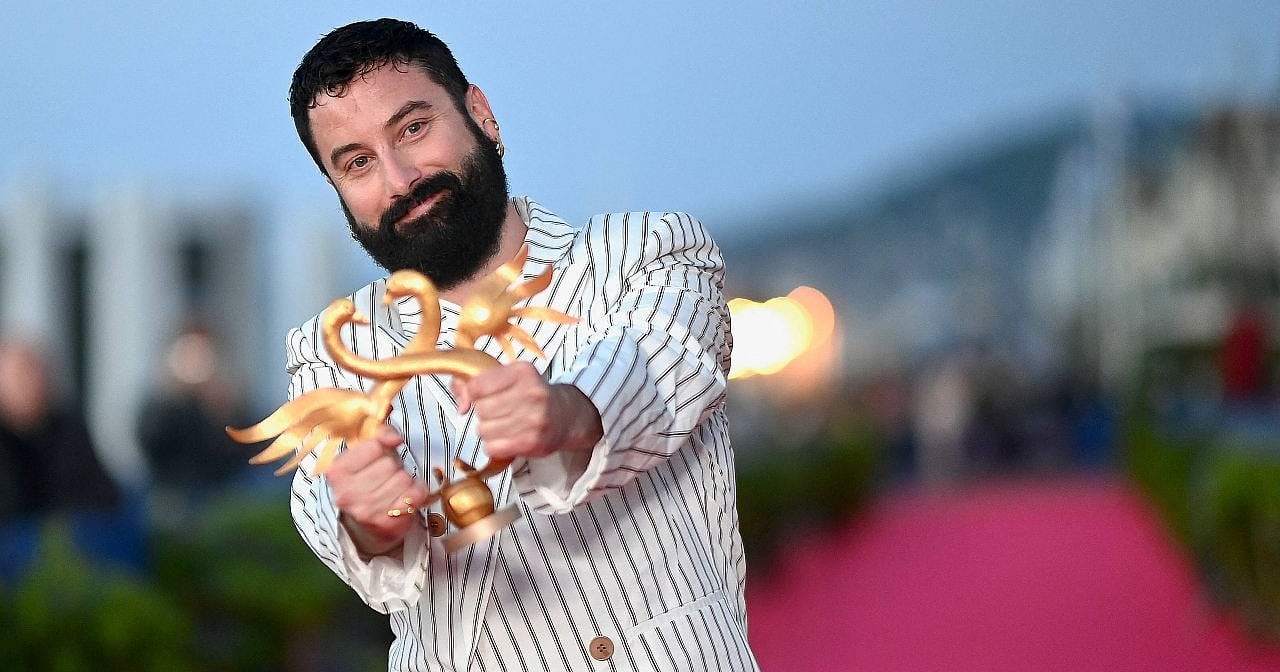
At this year’s Cannes Film Festival, the movie claimed the newly created Queer Palm Revelation for the festival’s queer discovery. A day after its world premiere, director Pierre Le Gall runs on a tightly packed schedule. Still, he carved out time to answer our questions.
Pierre, Flesh & Fuel is your first feature film. How much of you is inside it?
The film isn’t a direct autobiography, but there are certain elements I wanted to weave in. I grew up on a main road where an astonishing number of trucks rolled by. Even more crucial for the story is that both of my parents worked for the state. They both worked extremely hard—really, incredibly much—and showed remarkable endurance.
There were periods when I hardly saw my father because he was so busy. And they rarely took holidays. Another detail is that my former partner worked in theater and was often on tour. That’s why I can empathize deeply with the experience of a long-distance relationship—the sense of missing the loved one, the loneliness that can creep in.
The company Bartos works for is named “Hartman.” That’s not a random name, right?
“Hartman” stands for a strong man, a tough guy. It’s an ironic nod to that archetype. The name of Étienne’s transport company has a meaning as well. It’s a tribute to Joseph Ponthus. He had dreamed of being a writer, but he moved to Britain for his wife, who worked there as a professor.
He himself never found work other than at assembly lines, night shifts, or in slaughterhouses and similar settings. As a kind of consolation, he wrote poems in the evenings. After three years, he sent his poems about factory life to Gallimard, a very famous French publisher. The work was published and earned several prizes. That’s how he managed to realize his dream of being a writer in the end.
This fate moved me deeply, even though the story ends tragically: Three years later, at the age of 42, he died of cancer. I wanted to pay tribute to him by naming the company after him.
How did you find the lead actors? Julian Świeżewski, who plays the Polish trucker Bartosz, kept saying no several times, but you managed to persuade him.
First I found Alexis. I’m drawn to his frame—he’s solidly built and even carries a bit of a belly, which suits a truck driver perfectly. He also has a face that’s almost boyish, difficult to read.
I like the idea that the audience observes him behind the wheel and wonders, “What is he thinking right now?”—he feels like a mirror of our own inner world. At the same time, there’s a sort of child inside him that occasionally surfaces. You can feel that inner kid discovering love in his own way. And then I had to find the Polish truck driver.
About two or three years ago, I had a drink with a friend who said, “Oh, maybe I’ve got the right person for you—this guy I met in a theater in Warsaw.” She showed me his Instagram, and I literally fell in love. I thought, “Oh, he’s my man. Absolutely.”
I attempted to contact his agent, but I don’t recall the exact reason—he was on vacation, the situation was unclear—and after six months we understood why he hesitated: he didn’t speak French. So he had turned the role down several times. Still, we encouraged him. When he finally came in, I knew I’d found exactly what I’d been looking for—utterly different from Alexis, much more carefree. You could see how much life lived inside him. He was perfect for the role, and his accent was irresistible, simply perfect.
If I tweaked the script in any way, I’d send him voice messages to help him learn the pronunciation. Between Alexis and Julian there was a strong creative bond. Alexis gave Julian confidence with his French, and conversely Julian gave Alexis confidence in the nude scenes, since he’d never done them before. It was genuinely beautiful to witness, like watching a well-matched couple support each other through each others’ uncertainties.
The world of truckers is a very unusual setting for a gay love story. Why did you choose it?
It was crucial for me to tell a sweeping romance about two people who live wholly inside their work—people who have dedicated their lives to their craft. That becomes the centerpiece. The work itself prevents them from truly inhabiting the relationship. We spend our lives working, trying to earn a certain dignity, to be free, to earn our living—but how much time is left for the people we love?
This wasn’t about origins or sexual identity. I didn’t want to make a film about homosexuality, and I didn’t want the trucker milieu to come off as macho or a hostile environment toward LGBTQ people.
I’m drawn to this milieu because it encapsulates space, time, movement, and distance—and it’s a job many people pursue with real passion. It’s a line of work that’s often passed down from father to son and now, sometimes, to daughters as well. I didn’t want to gaze at these hardworking people with pity; on the contrary, they’ve chosen this life and pour their hearts into it.
At a certain point in the film, Étienne says, “If you can’t tolerate the rules of this job, then just quit—walk away.” That line makes it clear that you have to accept the realities that come with it. And this profession takes a heavy toll. The truck is stronger than a person, but the only thing capable of defeating it is love. That’s why, in the middle of the film, there’s a sweeping love scene. Love can be stronger than the truck, stronger than work, stronger than capitalism. And one of the few pleasures left to us humans is precisely this kind of intimate connection—the love. For me, it’s a way to declare: “Fuck you, capitalism.”
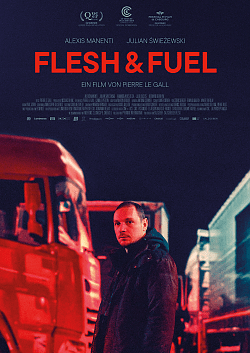
Flesh & Fuel. Drama. France, Poland 2026. Director: Pierre Le Gall. Cast: Alexis Manenti, Julian Świeżewski, Armindo Alves de Sa, Julie Duclos, Bernard Dereyne. Runtime: 90 minutes. Language: French-English-Polish original with German subtitles. Rating: FSK 16. Distributor: Salzgeber. Currently showing at the Queer Film Festival 2026