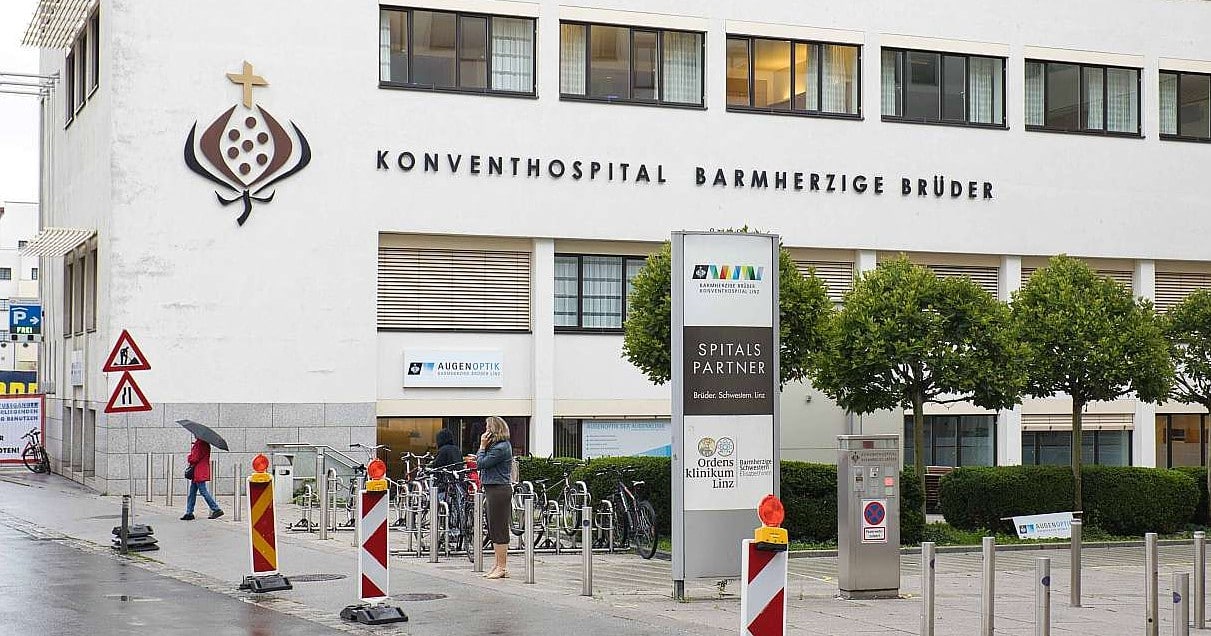
An astonishing scandal sparked outrage far beyond Austria’s borders: A week ago it emerged that a transgender woman in Linz, following an alleged rape, was turned away twice by hospitals. It was only after police pressure—or on the third attempt—that she received care in the violence emergency department of Kepler University Hospital (KUK). The Linz Public Prosecutor’s Office has since launched a broad inquiry. Among those investigated is a 34-year-old man suspected of rape. He claims that he did not have sexual contact with the transgender woman.
Further investigations target the three hospitals involved. The woman has filed formal complaints against them. The case concerns the potential dereliction of duty. “We have issued an investigative mandate to the Linz City Police Command,” a spokesperson for the Public Prosecutor’s Office told Oberösterreichische Nachrichten. It will be clarified, according to the prosecutor’s office, whether there are documents about the incidents, who was responsible, and why the woman was sent on. Until the charges are cleared, the presumption of innocence applies.
Every minute counts with date-rape drugs
The transgender woman, Viola, sought help immediately after the alleged assault. Time mattered because there was a suspicion that she had been slipped date-rape drugs. Those substances can be detected only for a short window in the body. To secure evidence, it’s essential to rapidly conduct blood and/or urine tests. A friend of Viola called the police right away. They requested an ambulance. Because the ambulance had not arrived after 45 minutes, the police took Viola first to the Hospital of the Brothers of Mercy in Linz. There she was, however, not treated. According to Viola, a physician asked, “If we look between your legs, what will we find?” Viola said she was a transgender woman. On that basis, her treatment was refused. She claims the physician cited internal guidelines for the denial.
In a statement from the hospital, the following was said: “Since the woman displayed male sexual characteristics during the examination in the gynecology department, the physician according to applicable legal regulations could not provide further treatment. The Convent Hospital does not have a urology department on site. The patient was forwarded to a hospital with the appropriate expertise.”
“I was overwhelmed by pain”
Yet Viola was not treated at Elisabethinen Hospital either. The hospital sent her, given the sexual assault described, to the violence emergency department at Kepler University Hospital. Elisabethinen states that the hospital has since reviewed and adjusted internal procedures to prevent similar situations in the future. The hospital also expresses sincere regret for the circumstances that the affected person experienced as highly burdensome.
Viola’s condition deteriorated after the two rejections. She was subsequently taken to the violence emergency department at Kepler University Hospital (KUK). Viola has epilepsy. During the journey to the third hospital, she suffered a seizure. At Kepler University Hospital, police reports indicate, Viola was initially placed in a back room. There, she had to wait for an hour, despite being in pain. “I was overwhelmed by pain, I could barely speak. The police, my girlfriend, and I repeatedly pointed out that I was having a seizure and needed help. But they did not help me. I did not receive any pain relief,” Viola said. The police then pressed hospital staff to provide assistance.
Kepler University Hospital’s CEO Meinhard Lukas disputes the allegations. “The claim that the transgender individual was abandoned at Kepler University Hospital is simply untrue,” Lukas told reporters. He noted that emergencies can mean that a person is not treated immediately upon arrival, but that the patient was medically cared for.
Violence emergency department is closed on several days
But the case raises several questions. Viola was brought to the Kepler University Hospital’s violence emergency department on a Wednesday. On that day, the unit is normally closed. The hospital’s website lists the violence emergency department as staffed only on Mondays, Tuesdays, Thursdays, and Fridays from 7 a.m. to 3 p.m.—the only such unit in Upper Austria, a state with more than 1.5 million residents. According to Kepler’s CEO, hours will be extended in the future, but around-the-clock care is not planned. The department’s name, “violence emergency department,” may raise expectations that victims of violence are always treated immediately, a standard the hospital says it cannot guarantee. As a result, there is discussion of changing the unit’s name to avoid misperceptions.
Moreover, Viola’s treatment raises concerns about the unit’s procedures. In police reports, Viola is listed as female, while in the violence department’s report she is referred to as “Mr.”
Queer organizations are furious
The Vienna-based Lesbian, Gay, Bisexual and Transgender Association (HOSI) Vienna, the largest queer organization in Austria, has long demanded nondiscriminatory, barrier-free, publicly funded access to health care for transgender, intersex, and nonbinary people. The LGBTIQ* demand catalog released by HOSI Vienna and its campaigns highlights significant gaps in the current health system when it comes to serving transgender people.
The experiences Viola endured leave the queer community “deeply affected and enraged,” said RosaLila PantherInnen, a queer advocacy group. They emphasized that anyone who has experienced sexual violence must receive immediate medical care, protection, and professional forensic documentation—regardless of gender identity, body, or legal status. Viola’s experience of being forwarded between two hospitals and not examined for hours underscores a critical need for action and sensitivity, the groups said. They called for clear accountability and non-discriminatory care across Austria. Trans people should not become a jurisdictional matter in healthcare. Anyone who needs help should receive it—swiftly, professionally, and without discrimination, said Joe Niedermayer of RosaLila PantherInnen.
Only in November 2025 did the social-democratic organization SoHo speak of a “health crisis in transgender medicine.” According to SoHo’s resolution, in Austria access to medical care, psychological support, and gender-affirming procedures for trans, intersex, and nonbinary people is “severely restricted” by structural barriers, long wait times, and a shortage of qualified professionals.