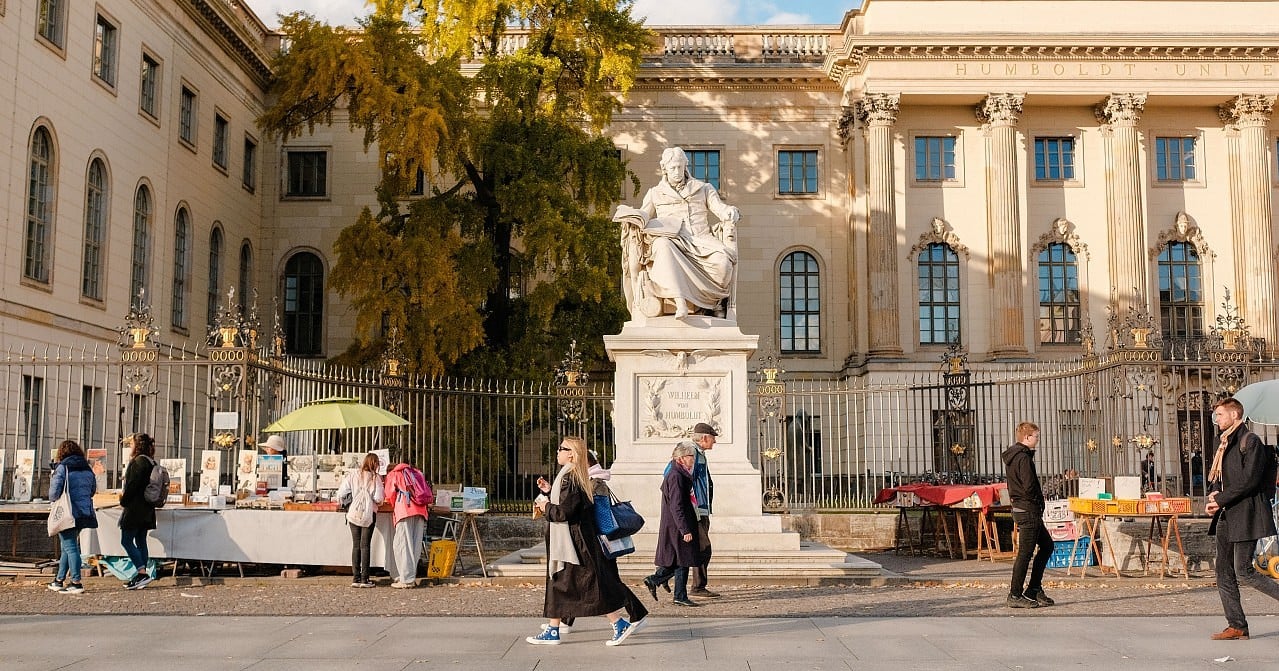
Humboldt University of Berlin (HU) now maintains an extensive collection on the history of HIV and AIDS. According to the university, a total of 17 archival bundles covering various aspects of the AIDS pandemic were acquired for the Haeberle-Hirschfeld Archive for Sexual Science, securing them for research. Political scientist Corinna Gekeler and journalist Axel Schock conducted the research and secured representative pre- and posthumous papers for the collection. A panel discussion with the initiators is planned for October 29, 2026 at HU’s Jacob and Wilhelm Grimm Center.
The collection comprises tens of thousands of individual documents, including letters, photographs, correspondence, brochures, leaflets, and circulars. It contains, among other things, personal materials of people with HIV who were incarcerated, from volunteers working with AIDS-support groups, from activists, and from relatives of AIDS-affected hemophiliacs. It also includes holdings from self-help and activist groups as well as from AIDS services and their facilities, such as care providers.
As early as 2012, HIV activists together with journalists and scholars began to safeguard documents on the history of HIV and AIDS in Germany. In 2014, the HU’s Research Center for the Cultural History of Sexuality, in cooperation with the University Library, launched a model project on AIDS history. For this purpose, the Haeberle-Hirschfeld Archive, built on the estate of sex researcher Erwin J. Haeberle, was deliberately expanded with sources pertaining to HIV- and AIDS-history. The project was conducted with the involvement of Andreas Kraß, head of the Research Center for the Cultural History of Sexuality, and Yong-Mi Rauch, head of the Historical Collections Department at the University Library. The project was funded by the Magnus Hirschfeld Foundation.