An unbelievable scandal is currently provoking outrage in the queer community. After a rape, a trans woman in Linz was refused care by hospitals twice. Only under police pressure was she treated at the third hospital. This is not an isolated case. The health system in Austria often fails when it comes to the medical care of trans, intersex, and nonbinary people. Queer organizations have been demanding reforms for years. Yet there have been no major changes.
The scandal over the denied treatment of the trans woman named Viola in Linz occurred already in May 2026, but it only came to light now. It was reported by the critical, progressive online magazine moment.at, which advocates for a sustainable and fairer society in Austria.
Viola endured a horrific ordeal. She was raped, presumably with date-rape drugs mixed into a drink. She managed to reach a friend, who immediately alerted the police. Because with date-rape drugs, every minute counts. They can only be detected in the body for a short time. To secure evidence, blood and/or urine must be tested quickly. In addition, Viola was in pain after the assault. The police therefore immediately called an ambulance to take the woman to a hospital.
Yet the healthcare system failed in a massive way. Viola said she felt she had “been through hell again” after the assault. Austria prides itself on having a particularly good medical system. But when it comes to the treatment and care of trans, intersex, and nonbinary people, the situation is different. Viola’s denial of treatment at two hospitals did not occur in a small rural hospital, but in Linz, Austria’s third-largest city.
No treatment because “not a phenotypic woman”
The first problem was the ambulance, which had still not arrived after 45 minutes. Therefore, the police decided to transport Viola in a police car to the Hospital of the Brothers of Mercy. According to Viola, a doctor there asked: “If we look between her legs, what will we find?”
This question, in the view of experts, is more than inappropriate in such a situation. It shows that when treating trans people, the focus often falls on the trans status rather than the concrete medical concern. Moreover, this was an emergency. Viola told the doctor that she was a trans woman. In response, she was refused treatment. The doctor cited that she was “not a phenotypic woman” as the reason. The doctor claimed to be relying on internal guidelines in the denial.
Viola had to wait another 45 minutes. No help was provided. Her condition worsened. She suffered panic attacks, as recorded in the police report.
Also at the second hospital no treatment
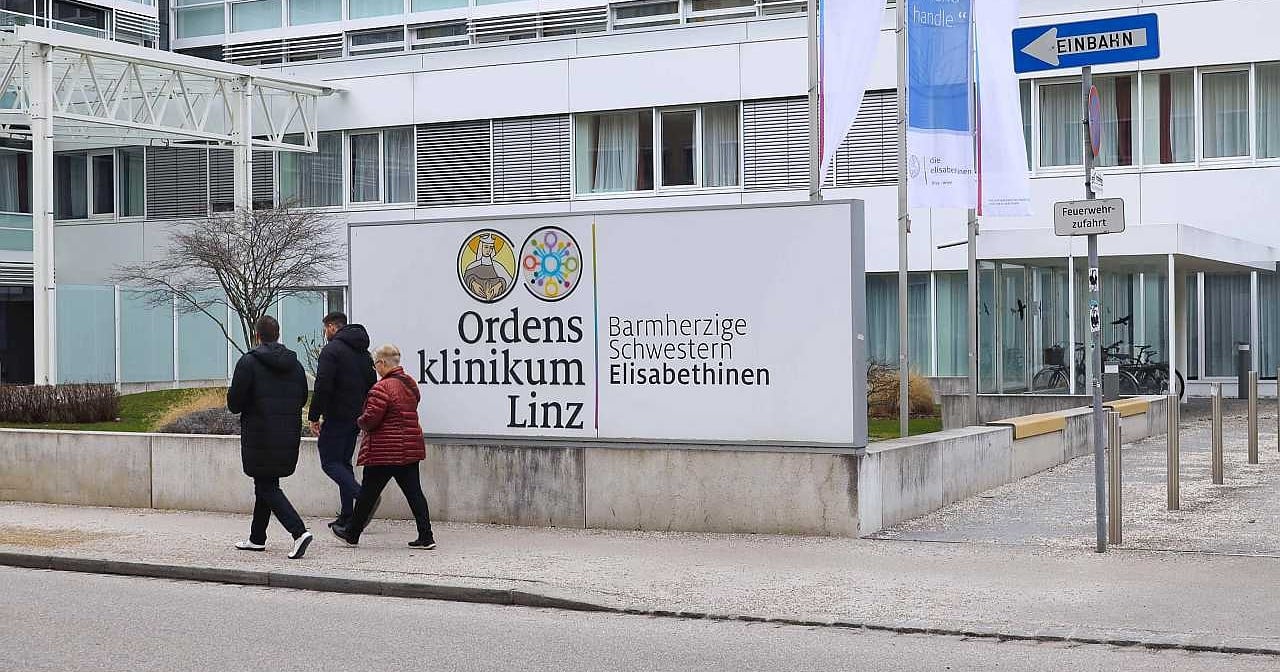
Eventually the woman was taken by ambulance to the Elisabethinen Order Hospital. The officers present stressed that it was urgently necessary to secure the scene for evidence. But again, treatment and examination were refused. Viola’s health continued to deteriorate. She was subsequently moved to the Kepler University Hospital. Viola has epilepsy. During the drive to the third hospital she had a seizure. At the Kepler University Hospital, Viola was initially placed in a “storage room” according to the police report. There she had to wait for an hour despite severe pain. In response, the police pressed the hospital staff to provide care. It was only then that examinations and treatment were carried out.
Viola wants Austria’s medical system to change. She has filed criminal complaints against all three hospitals. Other people with similar experiences have come forward in connection with Viola’s case.
Queer organizations speak of a “healthcare emergency”
The HOSI Vienna (Homosexual Initiative Vienna), the largest queer organization in Austria, has, together with partner organizations, been calling for many years for nondiscriminatory, barrier-free, and insurance-funded access to health care for trans, intersex, and nonbinary people in Austria. According to the HOSI Vienna LGBTIQ* demands catalog and its campaigns, the current health system shows significant shortcomings in the care of trans people.
Only in November 2025 did the social-democratic organization SoHo describe a “health emergency in transgender medicine.” According to SoHo’s resolution, access in Austria for trans, intersex, and nonbinary people to medical care, psychological support, and gender-affirming procedures is “severely restricted by structural barriers, long wait times, and a shortage of qualified professionals.”
While some improvements in medical care could be achieved due to pressure from NGOs, activists, and political groups like SoHo, these measures are “at most a drop in the bucket.” It is urgently necessary that this massive under-provision crisis be structurally recognized and comprehensively addressed to guarantee every person in Austria—regardless of gender identity, gender expression, or gender characteristics—a safe and self-determined access to the necessary healthcare, SoHo emphasizes.
Massive reform is needed
Many studies, surveys by the European Union Agency for Fundamental Rights, reports from self-advocacy groups and organizations, as well as a SoHo survey, highlight the reform needs. “Already simple visits to a general practitioner can become torture for those affected due to a lack of specialized knowledge, uncertainty among doctors, or open discrimination by healthcare staff,” SoHo’s report states. Treatments that are specifically needed are “often refused, and in many cases the discrimination experienced leads to the termination of treatments and thus the creation of barriers around the healthcare system.”
Many doctors and therapists also have only insufficient knowledge about trans-specific health needs. Patients are frequently confronted with misunderstanding, misgendering, or open rejection. “These circumstances and the long waiting times are unacceptable,” SoHo says.