The number of anti-queer hate crimes in Rhineland-Palatinate has risen sharply in recent years. Based on an analysis by the Rhineland-Palatinate State Criminal Police Office (LKA), 2025 saw a total of 118 offenses aimed at sexual and gender diversity registered. That figure was almost twelve times higher than in 2021, when there were ten cases.
The trend takes on added urgency in light of the recent attack on the edge of Berlin’s Christopher Street Day, which left one person dead and at least 31 injured. Security authorities have been observing for years a growing number of crimes against queer people and their communities. In Koblenz, a CSD event is scheduled from August 13 through 16.
Rising trend fuels fear among queer people
In the first half of 2026, police in the state had already recorded 33 offenses in the subcategories “sexual orientation” and “gender diversity” within the umbrella category of “hate crime.” The Interior Ministry told the German press agency this information.
The statewide statistics on politically motivated crime show a nearly continuous rise. After ten offenses were recorded in 2021, 2022 totaled 21 cases. In 2023 the number jumped to 51, in 2024 to 80, and in 2025 finally to 118. Among these were assaults, property damage, and threats.
In the period analyzed, the LKA registered 36 victims of anti-queer violence, including 32 men, two women, and two people listed as having a gender entry of “diverse.” Queer-hostile hate crime is generally considered politically motivated because it targets people based on sexual orientation or gender identity. At the same time, much of the offenses cannot be attributed to a single extremist ideology, since homo- and transphobic attitudes appear in different milieus.
According to the SCHMIT-Z network, queer people feel increasingly unsafe in public spaces. The reporting desk for anti-queer violence in Rhineland-Palatinate records more incidents, particularly vandalism as well as insults and harassment by strangers, the Trier-based association said. In discussions with other queer groups and the Queernet Rhineland-Palatinate network, reports of rising incidents have also been noted.
The development fuels fear among many queer people and leads them to withdraw more and more, SCHMIT-Z explained. Groups stop announcing where they meet, and queer individuals refrain from public actions or declarations.
In Trier, queer topics have been visible and well established thanks to democratically oriented networks and cooperation with the city community, local government, and the diocese. Still, safety concerns are growing there as well. The association cites public attacks and vandalism, including swastikas on Pride posters, as well as hate and threats online against events and initiatives.
Glööckler also faced hostility
“The statement ‘Today no gay person needs to hide’ is easy to say when you don’t have to live it,” said Harald Glööckler. The fashion designer has faced harassment in his youth. “I was attacked and insulted; the rejection back then was even supported by laws. That people are again wondering whether they must hide is sad,” stressed the artist living in the Palatinate region.
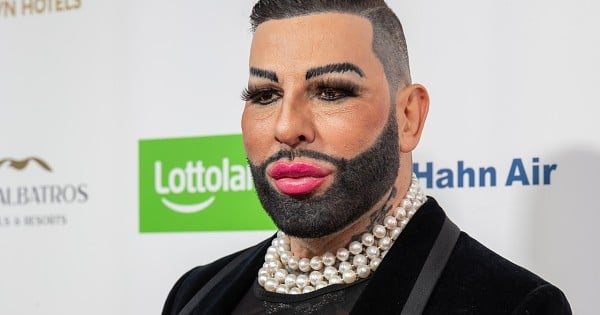
It’s a telling sign of the situation that the latest attack could have happened not only in Berlin. “That could have happened in Hamburg or Munich,” Glööckler said. “Unfortunately. That makes the matter even worse.” In a democracy, the state is also responsible for protecting its citizens. “People should be able to live freely in a democracy. That’s the whole point.”
Young people told him that he is a role model. “There are those who say, ‘Because of you I dared to come out in front of my class and my parents’.” He himself never came out. “I thought, if they’re that stupid and don’t notice, I can’t help them.”
Being different under general suspicion
Generally, he notes with horror and regret a growing rejection and condemnation of queer people and lifestyles that is increasingly fueling aggression and violence. “I get the sense,” Glööckler said, “that being different and living differently immediately puts you under general suspicion.”