Some moments call for a homemade Mojito. Lilia’s aunt seems to serve the cocktail exactly when you need it most. So it goes on the first night Lilia spends back in Tunisia. The young engineer flew in from Paris because her Uncle Daly has died.
She’s on the balcony, talking on the phone with her partner Alice. Alice came along to Tunisia but is staying in a hotel. Because the family must not know that Lilia is lesbian. Almost cheerfully, her aunt appears on the balcony, chops the mint, and offers the niece a drink.
Then the police ring the door
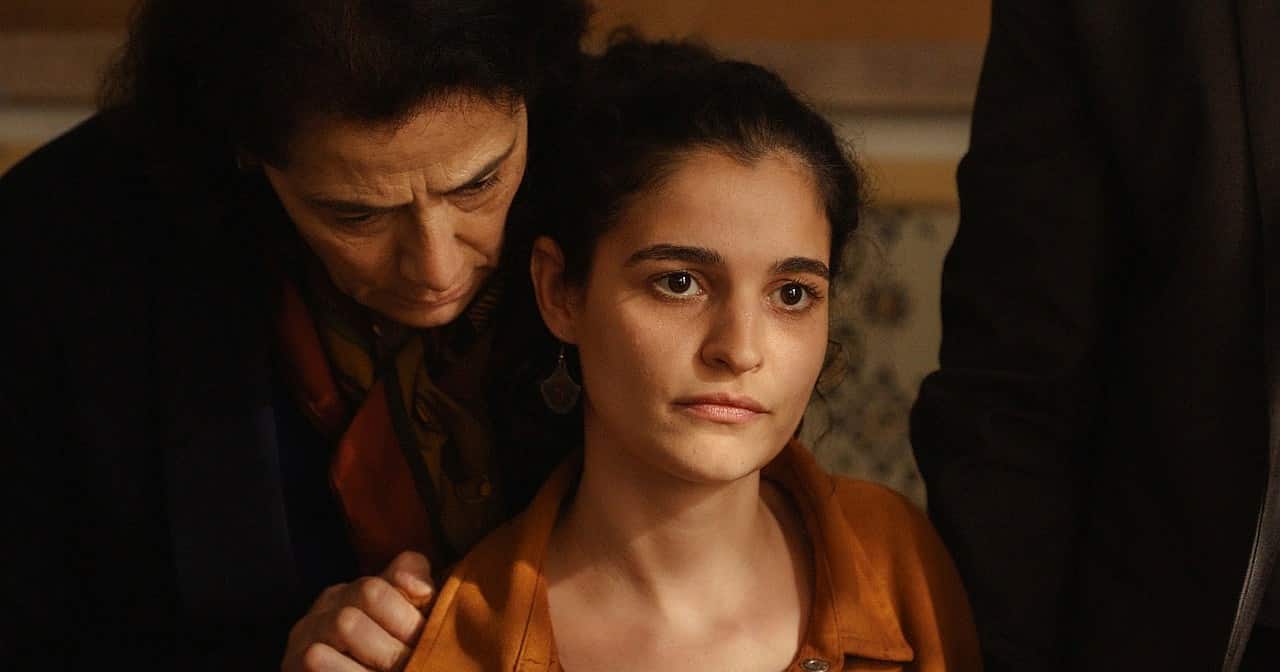
The trip is already exhausting, Lilia realizes. The death, her grieving mother and grandmother, plus the double life she must live here. Questions about children and partners. Yet her stay in the port city of Sousse, 130 kilometers south of Tunis, will bring her closer to home than she expected.
Because suddenly two police officers stand at the door. The discovery that Uncle Daly was found dead half-naked strikes the officers as odd. There are no signs of violence. Yet, the investigators hesitate, saying they’ve learned something about the deceased’s sexuality. That he was gay would cast the case in a wholly different light.
The Unsent Letters
Lilia didn’t know that, but the others did. The conflict over the uncle’s homosexuality continues to divide the family even after his death. Lilia now wants to learn more about Daly, someone she didn’t know well. She pore’s over old photos, reads unsent letters, questions her mother — and now sees her differently.
The French-Tunisian drama “In a Quiet Voice” explores how family dynamics shift, how conflicts can last a lifetime, and how they can unexpectedly turn. What each relative thinks is nuanced and far from clichés.
The Grandmother, an Iron Matriarch
This is already shown by the aunt who serves Mojitos—alcohol is no problem for her, but in other matters she is clearly more conservative. Or the fact that Lilia’s divorced father knows more about her than her mother. Specifically, Grandmother Néfissa stands out as an iron matriarch, a figure full of friction who both warmly embraces and mercilessly disciplines — in looks as in actions.
“In a Quiet Voice” also portrays a society where queer life remains taboo and criminalized. You can’t count on the police; state institutions are corrupt and easily swayed. Those seeking justice must take matters into their own hands — just like Lilia.
The Small Queer Community
She searches for old acquaintances of her uncle to understand his touching fate. In the process, she also dives into Sousse’s small queer subculture. Because, of course, queer people live here too—hidden, but proud. For them, “Vagina” is a compliment, and they mock French—uncircumcised—penises. Saucy and shameless—that exists here as well. These scenes are among the film’s best, especially because they are so surprising.
Otherwise, Tunisian director Leyla Bouzid, for her third feature, leans on familiar patterns of queer coming-of-age and coming-out stories. The conflicts between Lilia and her partner Alice are among the more expected parts. But because the mood sometimes takes on a thriller vibe, “In a Quiet Voice” stays tense.
The Thorns Are Not the Only Pain
Visually, the film also impresses: A museum visit yields ancient mosaics, such as Medusa, whose snake hair also stands for female anger and resistance. The small house of the grandmother — inspired by the house where the director spent her summers — is a lively, familial, almost museum-worthy place full of warmth. The pristine hotel room where Alice stays forms a stark contrast to that — the clash between longtime residents and tourists who might bring a touch of modernity to the country.
Many images carry a rich symbolic charge: Colors, in particular, signal aversion or belonging. And when Lilia’s mother pulls thorns from her daughter’s hand, that is not the only pain from which she liberates her daughter.
Direct link | Official German trailer
|
“These two women in love in Tunisia do not exist”
It is striking that Francophone cinema, following The Youngest Daughter, again explores female homosexuality within a Muslim culture. The lead characters in both films emancipate themselves without forgetting their origins.
“In a Quiet Voice” may not find a visionary mode of storytelling, but its political heft should not be underestimated — as evident in how difficult it was to cast the film.
Or, as director Leyla Bouzid puts it: “These two women in love in Tunisia do not exist. They do not exist either in depictions or in films shot in Arab countries. Confronted with Daly’s unfulfilled, frustrated love, they will shed light, stand by their love, and gently enact their revolution.”
In a Quiet Voice. Drama. France, Tunisia 2026. Director: Leyla Bouzid. Cast: Eya Bouteraa, Hiam Abbass, Marion Barbeau, Fériel Chammari, Salma Baccar, Lassaad Jamoussi, Karim Rmadi. Running time: 113 minutes. Language: Original in Arabic and French with English subtitles. Rating: G. Distributor: Neue Visionen. Theatrical release: July 9, 2026


In a Quiet Voice
6 Images