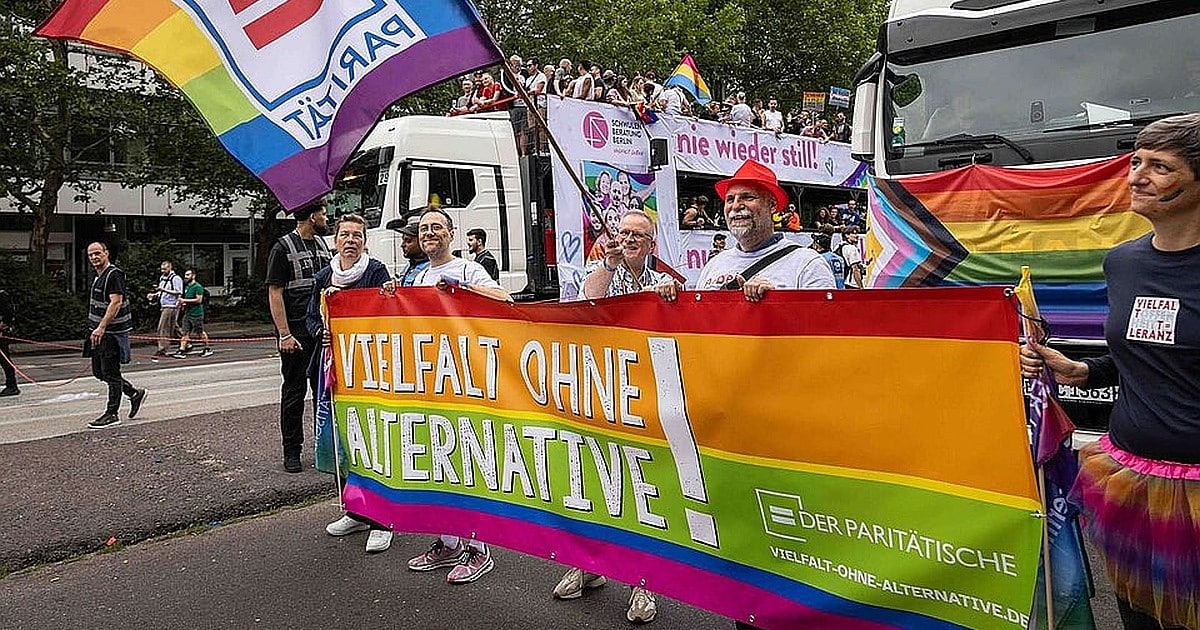
The idea of parity, the guiding principle behind the Paritätische Wohlfahrtsverband, has long embraced queer communities and their life choices. By 2025, the welfare association’s stance on queerness is unmistakable: “The acceptance of queer life is a key gauge of democratic cohabitation in Germany,” it states in its queer-policy foundational paper. The organization takes a clear stand in favor of the rights and protection of people from the LGBTQ+ community.
So it should come as little surprise that in recent years more and more queer organizations have become members of the association, such as at the national level the LSVD+ — Verband Queere Vielfalt, the Deutsche AIDS-Hilfe, Lambda, BISS, Lesben und Alter, or the Bundesverband Trans*, to name just a few. In addition, many more regional organizations are part of the state associations, for example the Schwulenberatung Berlin or LesLeFam.
Focus on the consequences of the rightward shift
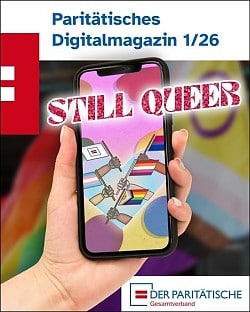
To draw greater attention to the current challenges facing queer organizations, as well as their successes and important work, the Paritätische’s current quarterly digital member magazine is entirely devoted to them. The title “Still Queer” nods to the first focus issue “Queer” from 2020, but it fits very well with the tireless efforts of queer organizations in Germany, who are facing increasing hostility.
The latest issue profiles individual initiatives and notable personalities from the queer community, such as Berlin activist Henny Engels or the party promoter LCavaliero. The Paritätische Welfare Association wanted this magazine to also shed light on the problems facing queer people due to the rightward shift, such as queer-hostile violence, the situation of queer refugees, or what it means for gathering places, for instance when queer clubs must close.
Particularly striking in this context is the portrait of the Berlin association LesLeFam, which had to temporarily relinquish its office in Berlin after a fire but found asylum with a friend project and continued its work. The importance of queer community and solidarity comes through clearly in many articles.
Not a few contributions also spread hope
Apart from heavy topics, there is often a hopeful tone, such as when discussing rising awareness among medical professionals about transgender topics or the Julie-Roger-Haus as a care home for queer seniors.
The various interviews in the issue paint a broad picture of queer activism and life in Germany. They once again encourage readers to notice, value, and support the work of regional as well as nationwide organizations, especially in times like these.
The magazine “Still Queer” can be read online for free on the Paritätische’s homepage.