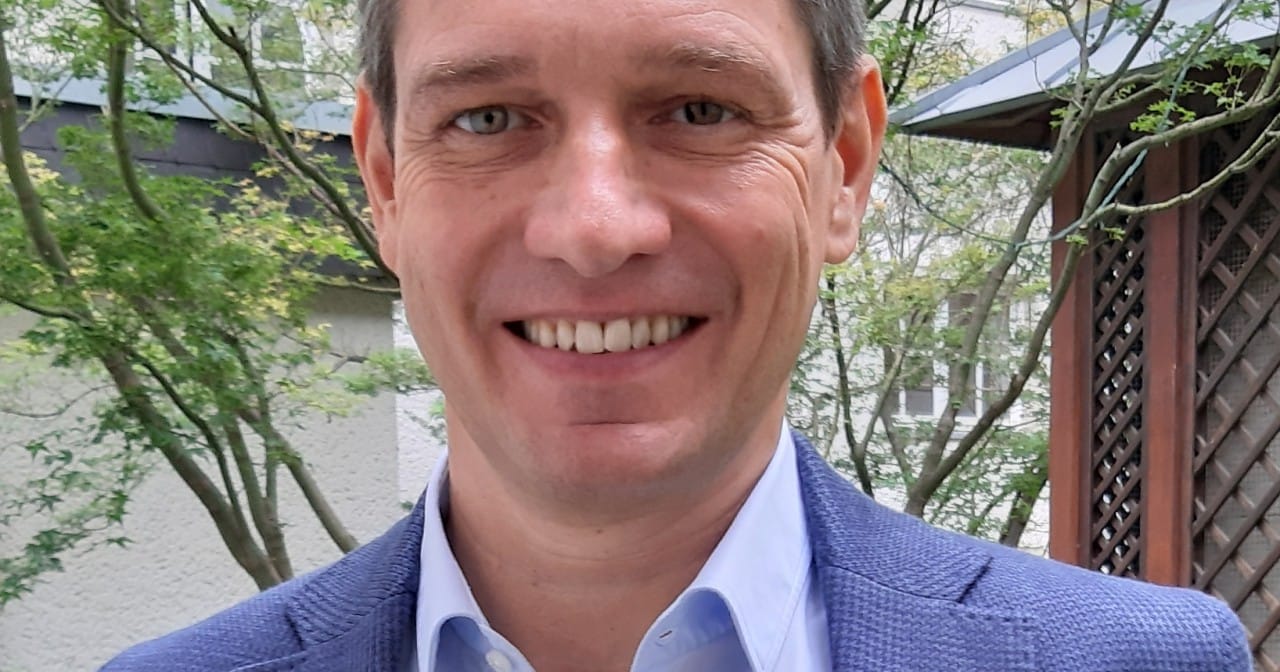
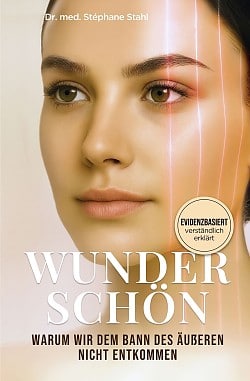
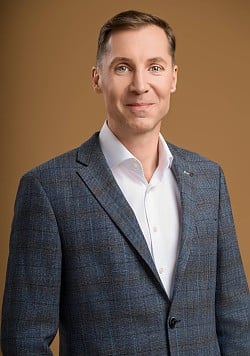
“Much of what we do in the morning in front of the mirror, without thinking about it, makes us more attractive,” explains Dr. Stéphane Stahl. He is a specialist in Plastic and Aesthetic Surgery, an attractiveness researcher, and the author of “Wunderschön — Why We Can’t Escape the Spell of Appearance” (Amazon Affiliate Link). In an interview with the news agency spot on news, he reveals how beauty quietly influences everyone in ways we don’t notice.
Question: Dr. Stahl, you write in “Wunderschön” that attractiveness shapes our everyday lives more than most people realize. What sparked you to write this book?
Dr. Stéphane Stahl: A paradox. There are many myths about beauty. And just as many scientific facts that contradict them. This contrast drew me in. I wanted to write a book that helps people. It should show what beauty is, how it works, and the mechanisms behind it.
Many people would say: “Beauty is in the eye of the beholder.” You partly disagree. Why?
Our perception is often surprisingly similar. Otherwise we wouldn’t see pink elephants or white mice that others don’t notice. What we find beautiful tends to align across cultures and eras. Even newborns respond to it. They look longer at faces we consider attractive. I don’t reject the saying out of hand; my own research reinforces these statements.
What makes a person attractive?
A lot of what we do in the morning in front of the mirror, without thinking. We highlight signs of youth and health. Makeup emphasizes full lips, dense lashes, and smooth skin. Bright teeth look healthy. Others things are hard to influence. A symmetric face reads as attractive and signals health. The middle ground also appeals, because it arises from genetic diversity. The closer two parents are related, the more unusual and prone to illness their offspring tend to be. Like a pug, whose flat snout makes it hard for him to breathe.
What do many people underestimate about attractiveness in daily life?
That it influences everyone subconsciously. The effect is measurable in nearly all areas of life. At work, attractive people receive more attention. In partner choice, they have an easier time. In everyday life, they’re remembered more easily. Their jokes land better. Even mistakes are more likely to be forgiven. The effect is observable even in court. Attractive lawyers persuade judges more easily. Attractive defendants receive fewer and milder penalties.
Where does biologically shaped attractiveness end and culturally shaped taste or fashion begin?
Fashion doesn’t create new beauty features. It just emphasizes signals that evolution has long anchored. Across cultures, clothing, hairstyles, and makeup pursue the same aims. A dress emphasizes the waist, a suit broadens the shoulders, makeup smooths the skin and highlights full lips. Whether a sari, a kaftan, or a cocktail dress, all stress the same features. Fashion decides whether hair is long or short. It doesn’t decide whether full hair looks more beautiful than brittle hair.
What role does attractiveness play in job interviews or professional life—and how can people use this knowledge for themselves and their careers?
Ideally, qualifications should count in the professional world. Yet studies show that appearance also matters. Attractive people are invited to interviews more often, perceived as more competent, and promoted more frequently. Some evidence suggests that appearance can outweigh competence. Even on the stock market, more attractive CEOs can lift a company’s share price. This knowledge can be used. A well-groomed appearance helps with choosing appropriate clothing, subtle makeup, and a cohesive hairstyle. It doesn’t replace performance, but it can yield a better first impression.
The debate around cosmetic surgery is often emotional. What bothers you about the public discussion?
Two things bother me. First, the prejudice against people who do something about their appearance. In the land of poets and thinkers, it’s quick to be dismissed as vanity. With my French roots, I see it differently. A healthy mind in a healthy body. Nobody calls brain training self-optimization. The body should be the same. Second, the simplification. Cosmetic surgery is a science. Its goal isn’t some random change but greater attractiveness. Many studies show that this can be achieved.
Do you see a trend away from an artificial look toward more natural results?
Yes, treatments are getting better year after year. But the assumption that they always look artificial has a flaw. Positive results aren’t often reported because they look natural. Some comments hunt for scandal. If a result is bad, it’s called artificial. If it’s good, it’s labeled as a youth obsession. That’s not analysis anymore; it’s critique as reflex. This is also visible in some reports about John Travolta. We often confuse naturalness with beauty. Biologically, we find the average most beautiful. Very thin lips can look as unattractive as lips that look like an air tube. And obviously crooked teeth aren’t prettier than straight teeth after braces.
What impact do Instagram, TikTok and filters have on your work?
You touch on an important point. The pressure to choose and to have more options is increasing, both in the workplace and in partner selection. We want more choices, but we forget that we are also being chosen. Yet beauty did not originate with TikTok. Filters and AI do what the maker of the Nimrod statue did centuries ago: smooth the skin and emphasize youth and symmetry. Louis XIV was always painted with a full head of hair, even though he was balding. What’s new isn’t the beautification itself but the speed, availability, and reach.
Are there Hollywood beauty ideals that are currently particularly in demand here in Germany?
What’s trendy is better known by people in the fashion industry. I don’t follow trends when it comes to medical treatments, and most of my patients don’t either. People want to look younger. This wish is as old as humanity and doesn’t come from Hollywood.
Have you observed that patients come to the practice with pictures of celebrities or influencers?
That happens. It happened even before influencers existed. I mainly see the positive sides. Such photos help me separate realistic from unrealistic expectations. That’s exactly why before-and-after pictures are so important. Only in that way do people get a sense of what’s possible and where the limits lie.
With the weight-loss injections, extreme skinniness seems to be coming back. How do you, as a plastic surgeon, view the phenomenon of the “Ozempic Body”?
The weight-loss shot has been subjected to rigorous testing worldwide and is approved for good reason. Severe obesity is dangerous and can shorten life expectancy. One in five adults in Germany is severely overweight. In that sense, the medication is progress. As a surgeon, I also consider the effects on the skin. If you lose weight quickly, the skin tends to sag. Three things matter when losing weight: 1. Lose weight gradually so the skin has time to adjust. 2. Eat a balanced, protein-rich diet. 3. Exercise regularly. If that isn’t enough, minimally invasive facial treatments or a lift can help.
If you had to sum up the most important message of your book “Wunderschön” in one sentence — what would that sentence be?
Beauty is perceived similarly by most of us, and it shapes our well-being more deeply than we realize.
Dr. Stéphane Stahl, born in 1977, is a plastic and aesthetic surgery specialist. He studied human medicine in Berlin and Freiburg, with study abroad periods in the United States and Brazil. Since 2018 he has run his own practice in Saarbrücken. Previously he headed a clinic department and taught at the universities of Bonn and Tübingen. (spot/)