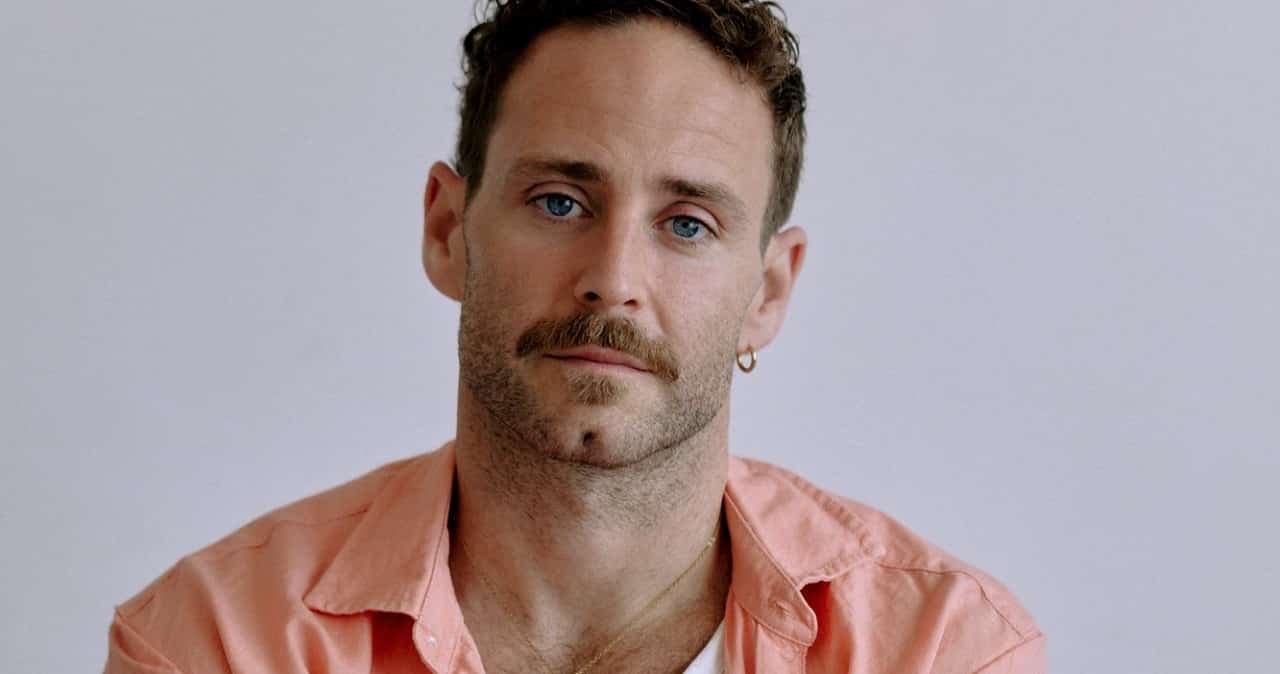
Election in the Netherlands has rarely been this gripping. After a long head-to-head battle, it’s now clear: the left-liberal and Europe-friendly D66, led by the openly gay party chief Rob Jetten, sits decisively ahead of the right-wing populist Geert Wilders and will be the strongest force with at least 26 of the 150 seats in Parliament. The 38-year-old Jetten has the best prospects of becoming prime minister — he would be the first openly gay man to govern the kingdom.
Rob Jetten will take the initiative to form a coalition. First he will appoint an exploratory negotiator to gauge the chances for a coalition. If such a chance becomes evident, coalition negotiations can begin. Politicians tend to take more time than in this country: that can take months.
Who are possible coalition partners?
Jetten wants “quickly a stable coalition,” he said. But for a stable majority in Parliament, at least four parties are needed. Without the big three, nothing works: the election winner D66 with 26 seats, the Christian Democratic CDA (18) — which has also performed strongly — and the center-right liberal VVD (22).
But that won’t be enough. Jetten and the CDA would likely want to bring along the red-green coalition with 20 seats on board — a coalition of this kind would yield a solid majority of almost 90 out of 150 seats in Parliament. Yet the right-wing VVD would rather pursue a center-right coalition with the right-wing populist JA21. Those talks are bound to be tough.
Jetten is the campaign’s breakout star
The 1987-born Jetten grew up with politics: he has been active with the left-liberal camp since his youth. He studied public administration and was a member of Nijmegen’s city council from 2010 to 2017. After that he moved to the Dutch Parliament. Soon after taking his seat he became parliamentary group leader. He also already has government experience: in the cabinet of the center-right liberal Mark Rutte he served as Minister for Climate and Energy in January 2022. A year and a half later his D66 elected him as party leader.
In the campaign, Jetten presented himself as optimistic and full of energy. He positioned himself as the anti-Wilders and aimed to settle with “20 years of sour, grumpy hatred” from Wilders. His slogan was “And it can be done” — a nod to his great role model: former U.S. President Barack Obama. His political priorities include climate protection and addressing the housing crisis in the Netherlands.
Privately, Jetten is engaged to the 28-year-old Argentine field hockey national player Nicolás Keenan, who plays for a Dutch club. The couple reportedly met in The Hague during a supermarket shopping trip. They have been a couple since summer 2022. In November 2024 Jetten announced that he had become engaged to his partner. Reports say they plan a wedding in the summer of 2026.
Direct link | The wohl zukünftige First Couple went about their relationship openly
|
What will become of Wilders?
The 62-year-old Geert Wilders now has to step back for the moment. The right-wing populist had shaped Dutch politics for more than two decades — and precipitated the collapse of the country’s most right-leaning government to date in June. He will likely remain as opposition leader in Parliament. His party has no path to join a government, because the firewall is back — all major parties refuse to work with him.
Geert Wilders lost nearly a third of his seats in the Netherlands.
The Far Right can be beaten, they offer nothing. pic.twitter.com/0ER0IdOMVOBladeoftheSun (@BladeoftheS) October 30, 2025
Wilders’s popularity remains undiminished. His supporters stand by him and do not blame him for the collapse of the previous government. Yet many of his fans have now voted tactically and cast their ballot for another right-wing party. Because of the distancing from Wilders, they feared that a vote for PVV would be wasted.
After his victory in 2023, Wilders formed a coalition with three other parties. He did not take the office of prime minister; that post went to the nonpartisan former civil servant Dick Schoof. But after only eleven months, Wilders pushed for a break over a dispute about asylum laws.
The far-right bloc is by no means weakened. Extremist right-wing parties have gained votes and now account for nearly a third of all seats. The so-called Forum for Democracy, seen as even more extreme than Wilders’s PVV, won seven seats — more than double what it had in 2023. Then there is the right-wing populist JA21. It comes to Parliament with nine MPs; previously it had only one.