Home » Health » Recent Articles:

From The Editor’s Desk: Lavender Gets it Wrong on HIV disclosure

[by James Sanna April 27, 2010 Feature, Health, Rants, The Fifth Column 3 Comments

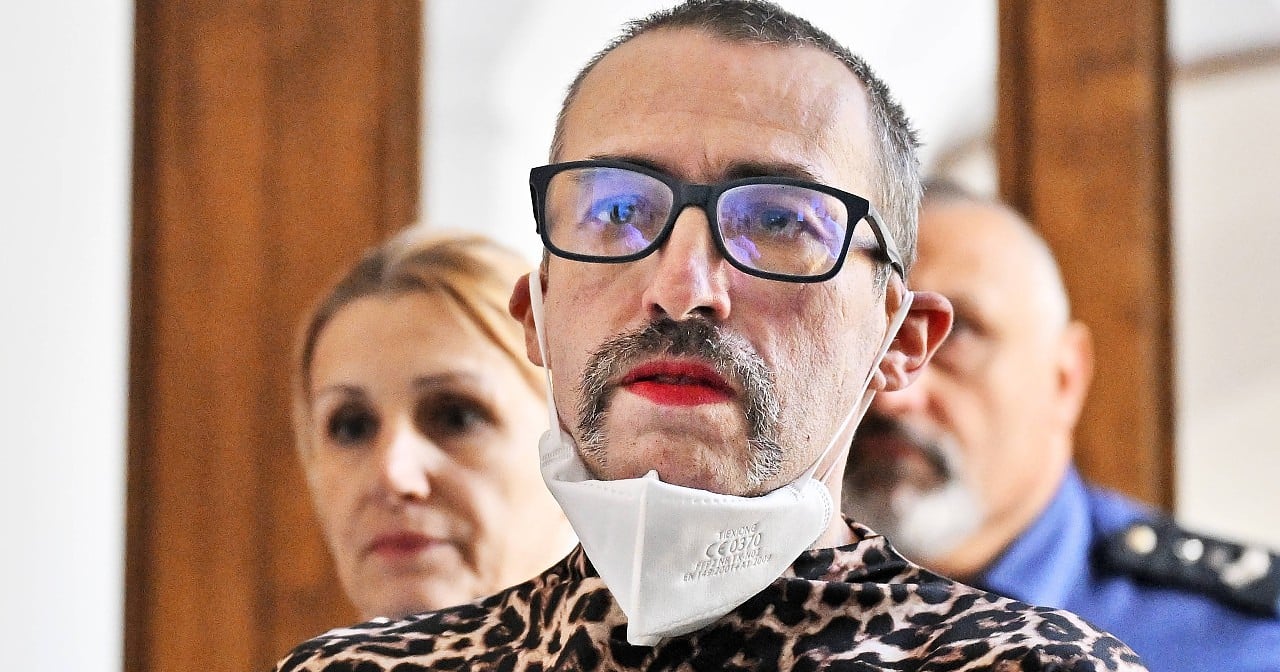
In its last issue, Lavender magazine ran a “public service announcement” about Daniel James Rick, a Minneapolis man that police say has had unprotected sex with other men without disclosing that he is HIV-positive. TheColu.mn feels that Minnesota’s largest LGBT publication not only missed an important opportunity to provide context to the case but also furthered the stigmatization of HIV-positive Minnesotans.

Lavenderuncritically printed its article as a “public service announcement” at the request of the Minneapolis Police Department without context. It doesn’t discuss scientific research that, according to Keith Horvath, an HIV prevention expert at the University of Minnesota’s School of Public Health, shows that only around 5 percent of HIV-positive men in America pass that disease on to a sexual partner every year. The police’s case against Rick — which still has to be proven in a court of law — is a rarity among HIV-positive men.

If the charges against Rick are true, then he would certainly have done a selfish, negligent, and generally reprehensible thing in knowingly transmitting a disease to someone else. However, when the laws governing the transmission of HIV were enacted in the early-1990s, the world of HIV was a different place. Today, a 35-year-old HIV-positive American man with the aid of medical treatment can be expected to live to age 73 on average, according to Horvath.

According to police and Lavender, Rick is charged with “Assault in the Third Degree—Knowing Transfer of Communicable Disease.”

The effectiveness and feasibility of such laws are surely up for debate and you can read the statute for yourself.

The World Health Organization, supported by a growing body of academic research, has came out in 2006 against laws that criminalize HIV, saying that such laws stigmatize those living with HIV and discourage people from getting tested for the virus. The vast majority of people who test positive for HIV take steps to ensure the virus isn’t passed on to other. And criminalizing the transmission of HIV will also create an atmosphere of fear where people may avoid getting tested.

Furthermore, the Lavender’s story fails to mention that, in each case where Rick has been charged, there was at least one receptive partner who did not demand that Rick use a condom. In at least one case, according to court documents (PDF), the alleged victim was drunk at the time of the encounter and was removed from the Saloon by staff because he was overly intoxicated.

“No” always means “no” is not enough when sex is concerned. People have to have the ability to say “Yes,” and the allegations against Rick are serious if proven true beyond a reasonable doubt. But we also know from years of research that intoxication with drugs and alcohol are implicated in new HIV infections among gay men with some studies reporting the incidence as high as 60 percent.

Whether intentionally, or because they weren’t aware of the facts and issues surrounding the transmission of HIV, the publishers and editors of Lavender ran a story that misrepresented HIV-positive gay and bisexual men as predators to be avoided, not the largely responsible friends and brothers they are. In doing so, they not only stigmatized members of the Minnesota LGBT community who they theoretically serve and missed an opportunity to challenge the growing acceptance of risky sex practices in our community, but they hurt the rest of us by spreading attitudes that directly harm HIV prevention and safe sex education efforts statewide.

The facts are that HIV can be avoided by using condoms correctly and consistently, and they are especially important with partners you don’t know.

Lavender’s editor did not respond to my call asking for more information about why they decided to publish this story, but as the largest LGBT publication in Minnesota, I hope they made an informed decision with the best interests of the community at heart, even if the available evidence suggests otherwise.

Thanks, Al: FDA “Revisiting” Gay Blood Ban

[by James Sanna March 24, 2010 Feature, Health, News Comments Off

Senator Al Franken

Thanks in part to efforts by 18 US Senators, including Sen. Al Franken, the Food and Drug Administration has announced they will be reexamining their long-standing ban on blood donations from men who have had sex with men since 1977 at a June meeting by the Blood Products Advisory Committee, the part of the FDA that sets regulations for donated blood. As the LA Times has reported, the American Red Cross and the industry group representing the nation’s blood banks have called for a loosening of restrictions to permit gay and bisexual men who’ve abstained from sex with other men for a year to donate blood.

“The FDA has been actively engaged in reexamining the issue of blood donor deferral for men who have had sex with other men (MSM),” FDA spokesperson Shelly Burgess wrote in an email to TheColu.mn, “taking into account the current body of scientific information, and we are considering the possibility of pursuing alternative strategies that maintain blood safety.”

Three weeks ago, Franken and his colleagues sent the FDA a letter arguing that the ban is outdated and scientifically unsound, in light of extremely sensitive HIV tests currently used to screen blood and the increasing rates of HIV among non-IV-drug-using heterosexuals, who are currently allowed to donate. The FDA maintains that the ban, last revisited in 2006, is nothing more than a concession to the higher rate of HIV among gay and bi men than among heterosexuals, and current tests aren’t up to the task of ensuring blood safety, even though the Agency admits they have a less than one-in-one-million chance of missing HIV in a sample of blood.

Currently, Burgess says, the FDA is not seeking public comment on the issue, since their reexamination has not yet resulted in a proposed rule.

Sex Ed Will Make You Gay, Says President of the Minnesota Family Council

[by James Sanna March 4, 2010 Feature, Health 1 Comment

Senator Sandy Pappas (DFL-St Paul) (Photo, James Sanna)

Sexually-Transmitted Infections are on the rise among Minnesota teens, but current law do enough to teach comprehensive sexual health education that would help both their straight and LGBT students stay safe as they start exploring their sexuality, say advocates. A pair of bills making their way through the state Senate and House of Representatives is trying to change that, but in Wednesday’s hearing in the Senate’s Health, Housing, and Family Security Committee, the bills met with at-times strange opposition from social and religious conservatives.

According to 2001 data presented at the hearing by Senator John Marty, a sponsor for one of the bills and the committee’s chair, American teens have much higher rates of STIs than their peers in Canada, the United Kingdom, France, or Sweden, even though teens in all countries have roughly the same amount of sex and start having sex at similar ages.

“We do a horrendous job of addressing STIs and teen pregnancies” compared to these countries, Marty told the committee.

Public health workers say comprehensive sex ed is not the only answer to the recent dramatic increase in HIV rates among young gay and bi Minnesotans, but they agree that it has to be part of any effort seeking to head off any more increases.

Tom Prichard, head of the right-wing Minnesota Family Council, testified that the kind of comprehensive sex ed outlined in the Senate bill would promote “homosexual behavior, anal or oral sex, things like that.”

“Do you think someone wakes up one day and decides to leave an ‘alternative lifestyle?’” responded Sen. Paul Koering, the state Senate’s only gay Republican member.

Prichard and other opponents of comprehensive sex ed also claimed that most Minnesota schools already teach some form of comprehensive sex education. However, in an interview with TheColu.mn last month, Lori Alveshere of the Minnesota Organization on Adolescent Pregnancy, Prevention, and Parenting, one of the groups lobbying for the bill, said that no-one knows what is being taught at all Minnesota schools.

Tom Pritchard (Photo, James Sanna)

Robin Edmunds, mother of two high schoolers at Chaska and Chanhassen high schools, said a sex ed seminar at one of the schools covering condom use “raped my children’s minds and souls,” and suggested that the proposed bill would offend many conservatives throughout the state.

Senator Sandy Pappas, the bill’s chief sponsor, responded that the proposed law offered plenty of opportunity for parents like Edmunds to pull their children out of portions of a sex ed class that they found offensive, and requires school districts to get specific parent approval for any new sex ed curriculum introduced to comply with the law.

Following the hearing, MOAPPP’s Alveshere conceded that this same provision that would make the bill palatable to vocal conservative groups in Greater Minnesota communities could also result in LGBTQ teens going through a health class without learning vital safe-sex practices, such as how to properly use a condom or a dental dam.

“We want to respect Minnesota’s strong tradition of local control [of school currculum],” Alveshere said, suggesting that achieving LGBT-inclusive sex ed in all Minnesota schools would be a two-step process.

“The bill leaves a lot of room for advocacy at a local level…for parents and teacher to advocate for what the community needs,” she said, referring to curriculum elements discussing anal sex and other ‘non-traditional’ positions.

So What’s Good Sex Ed?

I spoke to Emily Shor, a sex health educator at Minneapolis’ North High who is organizing a queer sex ed class for District 202, about what would make an ideal queer-inclusive sex ed program.

“One of the most important things for queer kids talking about sex is feeling really safe and feeling that there’s a strong base of community support,” she said. “Before talking about prevention want to make sure kids feel safe talking about being queer and sexually active, or not.”

To be fully inclusive and most effective, Shor said, educators would do well to talk in terms of behaviors, not identity. Not only does it make sure students don’t have to out themselves in front of peers, but it makes for more effective communication.

“You’re laying out all the risks,” Shor said. “You’re telling them ‘if you’re putting a penis in a vagina you’re at this point [on the risk continuum.]‘”

Senator John Marty (Photo: James Sanna)

“Keeping it alive”

Alveshere and Senator Marty were both less-than-optimistic that the bill would pass this session, despite a study by Dr. Michael Reznik from the University of Minnesota Medical School’s Pediatrics Department, presented to the committee, suggesting an overwhelming majority of Minnesota parents support comprehensive sex ed classes taught in schools.

“What we want to do is pass it, obviously,” Marty said in an interview following the hearing, “but it’s not likely to pass this year give the political realities.”

By making their case before the relevant committees in the House and Senate, Alveshere said, they were keeping the issue alive, and educating senators and representatives about the problems caused by a lack of comprehensive sex ed.

“I think if you had a governor leading the way,” it would pass easily, said Marty.

Don’t worry, Tom Prichard. Comprehensive sex ed won’t be turning Minnesota students queer.

Yet.

Rise in HIV Rates Not Caused By Bad Sex Ed…We Think

[by James Sanna February 18, 2010 Feature, Health 1 Comment

Drawing of the Human Imunodeficiency Virus, or HIV (Image: Wikipedia)

With new HIV infections up dramatically in 2009 among young gay and bi men, it seems logical to direct a lot of the blame at the demise of quality sex education programs in Minnesota schools for producing a generation of students ignorant about the risks of unprotected sex.

Not so fast, say advocates and researchers — while federal policy and education budgets under President George W. Bush focused resources for eight years on sex ed classes teaching only abstinence, Minnesota followed a different track that saved the state’s students from the worst excesses, but failed to address other problems with the way sex ed is taught.

Nationally speaking, Bush’s policies “essentially damaged a generation,” according to Greg Varnum, director of the National Youth Advocacy Coalition. “We don’t get a second chance with these folks” to teach them about safe sex practices, he said.

“We know that as many as 80% of the [abstinence-only] programs were proven to teach inaccurate information on safe sex practices and transmission of Sexually Transmitted Infections,” he said in an interview.

Most agree that school settings are the best place to teach sex ed life lessons, and there is a sizable body of statistical evidence that school-based programs increase condom use, reduce the number of sexual partners a person has (reducing the potential spread of an STI), and can delay the onset of sexual activity, according to Amy Brugh, Policy Director at the Minnesota AIDS Project. While it’s not clear that these programs produce the same outcomes for gay and bi men as they do for heterosexual men, advocates are hoping that the proven impact on condom use is common among both groups.

While Minnesota advocates agree that Varnum is right when speaking about the country as a whole, they say his apocalyptic scenario doesn’t quite pan out locally.

“The problem in Minnesota is not so much too much abstinence-only education as it is not enough good sex ed,” said Brugh. Minnesota rejected abstinence-only funds several years ago, she said, and chose not to match federal grant money given to community-based abstinence only programs.

“MDE is not giving technical assistance to school districts to do crazy abstinence-only education,” Brugh said in an interview, referring to the Minnesota Department of Education, the state agency that would typically handle money and set state-wide policy for in-school sex ed classes.

Not even eight years under Governor Tim Pawlenty has had much of an impact, said Lorie Alveshere, Policy Director at the Minnesota Organization on Adolescent Pregnancy Prevention and Parenting.

“Substantively, nothing has changed during the administration of Governor Pawlenty,” said Alveshere. “The statute has neither been improved or made worse.”

The problem is, Alveshere says her assessment of the situation is something of a guess, based on the general assumption that schools won’t create new programs when they aren’t required to do so or given the funding, in order to save money.

“There’s no resource that’s telling us what districts are teaching,” she said, although she says the legislature has been asked to survey school districts in the past.

Even though the LGBT community cannot look to our favorite whipping boy, Tim Pawlenty, there’s still plenty of room for frustration and advocacy-powering anger. Brugh says that anecdotally, she and other members of the Coalition for Responsible Sex Education hear rumors of some teachers not being properly trained and of some districts not giving teachers proper materials or assistance, but not enough to be able to cite statistics. The coalition is an umbrella group including both MOAPP and MAP whose members lobby for mandatory comprehensive sex ed in Minnesota.

So where to, now?

Advocates both in and out of the legislature keep pushing for a law mandating comprehensive sex ed in Minnesota schools. In the unlikely event that Pawlenty signs the newest bill into law, Dr. Gary Remafedi, the director of the University of Minnesota’s Youth and AIDS Project said teachers need to get explicit about how HIV is transmitted in both heterosexual and homosexual sex, and they need to be properly trained by their school districts so they won’t need to rely on outside specialists to teach the material.

To make sure young gay and bi men could get more relevant, in-depth information that wouldn’t necessarily make it into an all-encompassing sex ed class, Remafedi suggested special elective classes that would address HIV in particular.

For MOAPPP’s Lorie Alveshere, proper HIV prevention needs a culture change that goes beyond a requirement sex ed classes.

“Adults need to educate themselves and be available to young people,” she said. “Adults – not just parents – should care about whether or not this is taught to young people in their communities…Schools want to be doing the right thing but they may not have the resources or perceived support to do this.”

HIV Rates Up, Safe Sex Down

[by James Sanna January 26, 2010 Feature, Health 1 Comment

Drawing of the Human Imunodeficiency Virus, or HIV (Image: Wikipedia)

You wouldn’t think that a 13% increase in the numbers of Minnesotans diagnosed with HIV from 2008 to 2009 would be good news, right? But it is, because the alternative was a 25% increase the Minnesota Department of HIV had predicted based on the numbers of new cases between January and September of last year. According to Peter Carr, the head of the HIV and STI section at MDH, increases in cases in October, November, and December “bottomed out,” for a year-end total of 368 new cases, 203 were gay and bi men, and 73 were women (MDH doesn’t record the sexual preferences of women who contract HIV because risk of transmission during sex between two women is extremely low).

What that number of new cases does not include, however, are HIV-positive Minnesotans who have not been tested for HIV.

“The only way to know that is to routinely do a ‘population base study’ where you routinely grabbed 2000 people out of population [such as gay and bi men], and give everyone an HIV test” Carr told me in an interview today. “You look at who’s positive, and who knows their status. The problem is that’s really expensive.”

Carr said that, on a national level, it’s estimated that 21% of all HIV-positive Americans do not know their status, but it was hard to comment on how accurate that statistic is when applied to Minnesota.

“The patterns of infection are very different in different parts of country,” Carr said. “For example, New York has far more infections because of intravenous drug use than Minnesota.”

One of the most troubling aspects of the increase was that 42% of the men who were diagnosed with HIV last year had gotten themselves tested before, and 29% had gotten a test in the last year.

“The challenge is that people may be letting down their guard when it comes to practicing safer sex. Although there are medications to help treat HIV infection, some may mistakenly feel the threat of dying from HIV/AIDS is over,” Carr said.

As in years past, African-American gay and bi men bore a significantly higher burden of the disease than most other groups of Minnesotans – while they are only around 3% of the state’s population, they represented 39% of new cases last year.

“That’s not due to higher level of risky behavior,” Carr said. Rather, it’s “due to a higher level of what are called “social determinants” – access to health care, geographic concentration, poverty – that puts a population at greater risk of contracting a disease regardless of behavior.”

HIV rates jump in Minnesota: A Search For Answers

[by James Sanna January 7, 2010 Feature, Health 2 Comments
Photo: Gernhaex

Photo: Gernhaex

“Why?” When it comes to this year’s double-digit increase in HIV rates among Minnesotans, that’s a simple question with a very complex answer. The Minnesota Department of Health (MDH) has launched a study to analyze the the 25 percent increase in HIV cases statewide, including a 27 percent increase in HIV cases among young gay and bi men, but many prevention advocates say the situation is murky, and none of the many HIV health workers and educators interviewed for this story could cite a new development that could account for the sudden jump in new cases.

The MDH study will be published in January.

“I could think of five or six things just off the top of my head,” said Nick Schrott, a health educator with the Minnesota AIDS Project’s Positive Link program, in an interview last week. Schrott suggested the surge in diagnoses was likely linked to a “perfect storm” of a broad range of factors: a decline in comprehensive sex ed in Minnesota’s public schools, emotional health, infidelity, the rise of arranging hook-ups via websites like Craigslist.org, a sense that the risk of contracting HIV has dropped, and HIV’s new public image of a manageable disease instead of a death sentence.

Many other health workers echoed Schrott’s words, but some cautioned that not everyone impacted by HIV is influenced by the same set of circumstances. “There are mini-epidemics within the larger epidemic that are incredibly distinct from each other,” said Rob Yaeger, a member of of the Minnesota Department of Health’s HIV and STD unit. “We can’t be thinking about one-size-fits-all about prevention and care.”

Take the internet’s possible role. As Schrott described it, sites like Manhunt.com or Craigslist.com dramatically simplify the sometimes-trying process of finding a casual sex partner at a bar, and increases the ease with which more and more people can connect who potentially don’t know their HIV status. It would be easy to place much of the blame on something so pervasive — because of how popular internet hookups are — and Yaeger and his MDH colleagues say they will be focusing part of their study specifically on their impact.

But talk to health workers Jennifer Houston, Antonio Marante, and Mario Villeda Maldonado from St Paul’s WestSide Community Health Services, a community clinic that specializes in working in bilingual populations notably the Latino and Hmong communities, and they will point out that most of their newly HIV-positive clients have little regular access to the internet. Even without the internet, Houston, WestSide’s Manager of Community Health and Outreach, says that the organization has seen an increase in new HIV cases that is quite similar to the statewide data.

“I’m not sure if the ‘perfect storm’ description is exactly right,” said Charlie Tamble, a Community Health Specialist with Minneapolis’ Red Door Clinic. However, Tamble agreed with others health workers, saying that, based on what trends he was noticing in his new patients, the ground was fertile for a big increase in HIV cases.

“If a community of individuals are used to not using condoms, and they’re sexual with each other, and there’s a low incidence of HIV among that group, then the chances of transmission [through anal sex] are quite small,” Tamble said. “Then, if HIV is introduced into that community through a few folks who don’t know their status, the risk of HIV increases astronomically.”

But why not use condoms? Schrott suggested that some men may be lulled into a false sense of security by getting frequently tested for HIV. “I know, based on anecdotes, that there are many folks out there getting tested 4 times a year. Their last test was negative, the one before was negative, so they start thinking ‘why won’t the next one be negative, as well?’”

The dangers of unprotected anal sex outside of a long-term monogamous relationship then start to seem small, said Gary Novotny, the Program Manager for MDH’s Health Education Risk Reduction Unit. “This is a generation of folks who haven’t seen their best friends die…and gone to 50 funerals a year,” Novocny said.

Other men, suggests Tamble, fall victim to relationship naiveté. “At the start of a relationship, people always want to appear squeaky clean,” Tamble said, “so they don’t always talk about their status early on. People can assume that if something was wrong their partner would tell them, or they’re embarrassed to even bring [the issue of HIV status] up.”

Much of this behavior, health workers say, is fueled by ignorance of the risks of contracting HIV, based on a lack of comprehensive sex education in schools, and a sense that HIV is no longer a death sentence.

“We’ve got a generation of very under-informed youth and we may be seeing the result of that,” MDH’s Novocny said.

“[At the Minnesota AIDS Project], we’re still getting questions like ‘can I get HIV from kissing someone?’” said Schrott. “We thought those questions had gone away.”

“Young gay and bi men are just not informed,” said Collette Lawrence, a Case Manager and Community Health Educator with the Indigenous People’s Task Force. “They’re taking themselves out of that risk group, and there’s a real lack of knowledge about risky behavior!”

Alan Horowitz, the head of St. Paul Public Schools Out for Good program, agreed that most schools in the suburbs and in Greater Minnesota did not have sex ed programs that dealt sufficiently with HIV, but even where young gay and bi men have access to good sex ed programs, the lack of a “fear factor” keeps students from taking the disease seriously. “I don’t think we’ve figured out how to present things to adolescents that will help them make smart decisions,” he said.

“There’s a bittersweet message that’s come along with the many types of [HIV] medications that have come out in recent years,” said MAP’s Schrott. “It starts to paint a picture that HIV is no big deal, and people start thinking ‘if I contract HIV I can take one pill a day and I’ll be fine.’”

In some parts of Greater Minnesota, said Lawrence, some treat HIV is simply a “city problem,” and decline to take risks seriously, or help prevention programs spread their message.

“On reservations, the farther north you get, the more resistance you get,” Lawrence said. “I literally had a guy say to me ‘There’s nobody living on this reservation living with HIV.’”

No matter what the MDH study turns up as a chief cause behind this dramatic rise in HIV cases, though, health workers say they will still be hamstrung as they try to address the problem without additional prevention funding from the state.

“Flat funding can only serve to maintain what’s been working,” said WestSide’s Jennifer Houston.

This is the second of a four-part series on the dramatic increase in reported incidence of HIV among gay and bisexual Minnesotan men, ages 15-24. Stay tuned for our report on the health system’s limitations as it tries to respond, and what the young men impacted and threatened by this crisis think.

HIV rates jump in 2009, close to matching worst of early AIDS crisis

[by James Sanna January 5, 2010 Feature, Health Comments Off
Drawing of the Human Imunodeficiency Virus, or HIV (Image: Wikipedia)

Drawing of the Human Imunodeficiency Virus, or HIV (Image: Wikipedia)

Officials from the Minnesota Department of Health are comparing it to the “bad old days” of the early 1990′s – rates of new HIV cases among young gay and bi men in 2009 are on track to match similar rates from 1992, when much of gay America was being ravaged by the worst of the HIV pandemic.

According to an announcement emailed by MDH to many of the state’s HIV testers and service providers early last month, 75 Minnesotans ages 15 to 25 had tested positive for HIV between January and September. That’s a 27 percent increase over new HIV cases in the same age group for all of 2008, driving overall HIV rates up 25 percent from the same time last year.

Most of the new HIV cases are likely to be in the Twin Cities metropolitan area based on past trends and the 2009 data, said Peter Carr the Director of the HIV and STD Unit at the Minnesota Department of Health. While some of the dramatic new increase is borne by women, Carr said, and there were increases in communities of color, most of the increase was among gay and bisexual men.

However, as troubling as this increase is, says Carr, public health officials don’t have a good idea about what’s driving the problem. Without this knowledge, health workers are hamstrung as they try to re-evaluate prevention strategies that are either not working, or not working well enough.

“Most of the important ‘why’ questions are anecdotal,” Carr told TheColu.mn. “The data’s not as hard on that as the simple epidemiology.”

In response, Carr said his department was launching an early review of 2009′s HIV data, in hopes of figuring out what’s driving this dramatic and unexpected surge in new infections. The analysis is due out at the end of this month.

Rob Yaeger, also with MDH’s HIV unit, cautioned that part of the surge may be the result of more people seeking regular HIV tests as a result of health education efforts within the gay and bi communities. “The question is not when they were tested, but when were they infected?,” Yaeger told TheColu.mn.

When thinking about solutions, however, Yaeger said problem is compounded by “mini-epidemics” within the larger Minnesota gay and bisexual community. Immigrants to Minnesota, Latino Minnesotans, African-American Minnesotans, and White Minnesotans, for example, are dealing with different sets of issues around HIV, he said, and couldn’t be lumped together.

“We can’t be thinking about one-size-fits-all about prevention and care,” he said

The information Carr and his colleagues uncover in their analysis will certainly be shared with other states and the federal government, Carr said, and will hopefully be included in the new National HIV/AIDS Strategy, currently being developed by Obama administration.

This is the first of a four-part series on the dramatic increase in reported incidence of HIV infection among gay and bisexual Minnesotan men, ages 15-24. Stay tuned for experts’ views on what might be driving this rise in cases, for the health system’s limitations as it tries to respond, and what the young men impacted and threatened by this crisis think.

Services for sexual violence survivors shrink in Hennepin County

[by James Sanna November 6, 2009 Feature, Health, News 1 Comment

SVC logo

Pawlenty’s budget cuts and an economic recession are threatening LGBT-specific services for survivors of sexual violence, but advocates say they will work hard to keep those services open — and they will need the community’s help to do so.

It’s not like sexual violence is an isolated problem, impacting only a few. Statistics from the FBI show one in three women in the US will be sexually assaulted in their lifetime, and one in four girls and one in six boys will experience sexual violence by the time they hit 18 — and these are just the reported cases. Problem is the health system can be downright hostile to LGBT survivors of sexual violence.

Maybe your parents’ friend keeps trying to grope you when they’re visiting. Maybe your date slips something into your drink at the bar and takes you home. Maybe your significant other forces you to have sex when you don’t want to.

You want to get help, but the ER nurse won’t believe that a woman did this to you. Or they call you a “freak” because your driver’s license assigns you one gender, and you live another. Or they ask why you don’t use birth control even though you’re sexually active. Or your dad finds out that you’re gay, because he’s listed as your emergency contact.

If you went into any hospital in Hennepin County this week to get help after being sexually assaulted, you’d be able to speak to an advocate — 24 hours a day, seven days a week — who would help you talk to the ER staff and who could defend you if need be. These advocates are either lesbian, gay, bi, or trans themselves, or are extensively trained allies, and they’re free of charge – no insurance needed. Come January, though, you could be all alone — these 24-hour advocates, provided by Minneapolis’ Sexual Violence Center, look set to loose a contract from Hennepin County at the end of this year that provides around 10 percent of their funding, another casualty of the state’s economic crisis.

“This is in no way a reflection of the Center’s performance. Hennepin County is in a budget crisis, and any services that are not legally mandated are getting trimmed,” said County spokesperson LouAnn Schmaus, ticking off the causes — falling property values and, most damaging of all, Governor Pawlenty’s unilateral cuts – known as unallotments – to local government aid and to the General Assistance Medical Fund.

For the last several years the county has faced “a constant struggle” to get the budget in line with the dollars coming in from the state, Schmaus told me earlier this week. It’s a number that’s been dropping every year, she said.

The Sexual Violence Center is paid $45,000 per year by Hennepin County to fund a 24-hour crisis line in the county, that dispatches advocates to help survivors of sexual violence as young as 12 navigate the medical system, according to Executive Director Pamella Zeller.

“Any time a victim walks into any hospital in Hennepin, Scott, or Carver counties, we’re paged,” said Jude Foster, the SVC’s Minneapolis program director.

The SVC also offers one-on-one counseling to survivors, support groups (including an LGBT-specific support group), a monthly free legal clinic for survivors trying to press charges, and community education.

“It’s incredibly important to have queer-specific programs,” Foster said. “When you’re vulnerable and talking about your sexual abuse history, the last thing you want to do is confront prejudice….we can interface directly at that time of intervention to help liaise between health care providers and a survivor.”

The SVC also trains forensic nurses and law enforcement officers throughout the metro area “so we can hopefully avoid those situations before they come up,” said Foster.

Zeller says the SVC is looking to fill the gap with “aggressive fundraising,” but prospects aren’t good for keeping their Hennepin County operations fully funded.

“We’ve had layoffs,” says Schmaus, the County spokesperson. “We’ve had a hiring freeze in place for years; we’ve reduced or eliminated contract services; our employees have taken leave without pay…Even with all these cuts, the property tax portion for people who live in Hennepin is proposed to be a net $664 million increase” to patch hole in Hennepin County Medical Center’s budget left by the Governor’s unallotments.

“Since [sexual assault advocacy] is not a state- or federally-mandated service, we’re considered expendable,” Zeller says. “But I cant’ think of a more violent crime than sexual assault!”

Zeller and others affiliated with the SVC have been meeting with Hennepin County commissioners, who will decide the fate of the $45,000 contract after hearings on the 16th and the 20th, to try to build support for rescinding the potential cuts. The commissioners, Zeller said, were sympathetic, “but they said basically because of major GAmC cuts and other major Human Services cuts, [Commissioner Peter] McLaughlin told us “we don’t know where money is going to come from…we can’t promise anything because the county it in pretty dire straits.”

Zeller urged anyone who supported the SVC to testify about the impact of it services at one or both hearings held by the county commissioners on November 16th and 20th. To sign up, contact the Clerk of the County Board by email (board.clerk@co.hennepin.mn.us), phone (612-348-3081), or mail (A2400 Government Center, Minneapolis, MN 55487)

Minnesota HIV advocates talk federal policy

[by James Sanna October 16, 2009 Feature, Health 1 Comment
Photo: Gernhaex

Photo: Gernhaex

After almost three decades into the epidemic, the federal government is finally drafting a nation AIDS policy, and community leaders want you to know that your input is important.

The Office of National AIDS Policy has set up a “call to action” page, where you can send them your thoughts, 5000 characters at a time, for consideration as the Obama Administration drafts a new National AIDS Policy. And they want everyone to write in. According to Peter Carr, the head of the Minnesota Department of Health’s HIV and STI section, “we want everyone who deals with the issue of HIV personally or professionally to [give input].”

This input will be fed to a committee, led by the ONAP and drawing members from the different federal agencies that serve the HIV/AIDS community.

While the “Call To Action” is open to anyone, several Minnesota HIV/AIDS advocates and service providers have some strong ideas about how to improve government policies, which are being pushed behind the scenes. Here’s the skinny: these groups want more funding for prevention and a more equitable distribution of funds among communities hit hardest by the disease.

“About four cents on the dollar.” That’s how much federal money currently goes towards prevention efforts, according to researcher and consultant Juan Jackson. “Of that money [spent on prevention efforts], so much is actually spent in administration at the state level that by the time they get it out to direct prevention services, to groups actually delivering interventions, it’s actually more like two cents on the dollar.”

Both Amy Brugh, the Public Policy Director for the Minnesota AIDS Project, and Gwen Velez, Executive Director of the African-American Aids Task Force, agreed that this was a big problem. Velez said some days prevention efforts feel almost non-existent compared to what the community needs. “That would be at the top of my list,” she said.

But Velez said she’s also very concerned that current HIV/AIDS spending doesn’t allocate money to programs that could change the disease’s disproportionate impact on African-Americans. According to the Kaiser Family Foundation, a well-respected source of data and analysis on the HIV/AIDS epidemic, while African-Americans form 12 percent of the national population, 45 percent of new HIV infections in the US were black. And 11.2 percent of all people living with HIV/AIDS in America are black and that number is skyrocketing.

“Nation-wide the money allocated doesn’t reflect the face of AIDS,” Velez said. “The money is not dedicated to specific programs that could shift these numbers.”

AIDS Funding Bill Advances, Despite Procrastination

[by James Sanna October 2, 2009 Feature, Health, politics Comments Off

David Iliff, Wikipedia Commons

David Iliff, Wikipedia Commons


It’s an open secret that Congress has bigger priorities than re-authorizing federal funding for the nation-wide network of organizations that provide services to HIV-positive Americans. On the day when the Ryan White Act was originally set to expire, the Senate committee overseeing health care (including our own Al Franken!) finally got around to approving the re-authorization bill and passing it on to the full Senate for a vote. The House is still working on their version of the re-authorization legislation.

But don’t worry – funding for HIV/AIDS care and prevention funding is not about to dry up due to official procrastination. According to Amy Brugh, Public Policy Director of the Minnesota AIDS Project, both houses of Congress have passed what are called “Continuing Resolutions” that keep the money flowing until a final re-authorization bill can be passed and sent to the President.

“The reason for it coming down to the wire has nothing to do with politics or with HIV, but with the way Congress works,” Brugh told us earlier this week. A spokesperson from Rep. Betty McCollum’s office (D-MN) explained that, because of several issues including the health care reform debate, Congress has not yet had time to deal with the legislation. McCollum sits on the House’s Labor, Health and Human Services and Education Appropriations Subcommittee, and is a leader in Congress on HIV/AIDS issues.

Plugin from the creators of Brindes :: More at Plulz Wordpress Plugins